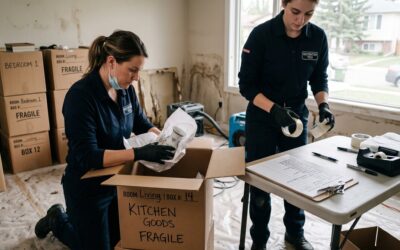
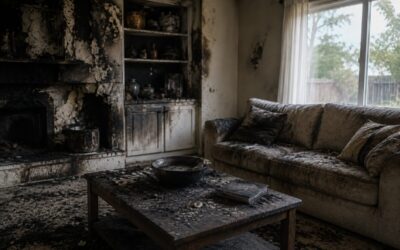
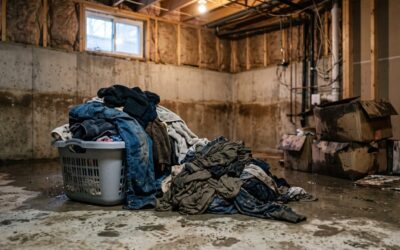
After a fire or flood, two kinds of restoration happen at once. A structural restoration contractor repairs the building: drying, demolition and rebuilding. A contents restoration company looks after everything inside it: packing out, cleaning, restoring, storing and returning your belongings. They work on the same claim, often on the same day, but they are different trades with different equipment.
Knowing who does what helps you ask the right questions in the first few days, when decisions about your belongings get made quickly. This guide explains both sides, how they work together on a Calgary claim, and why a contents specialist usually saves more of what matters to you.
Key Takeaways
- Structural restoration repairs the building; contents restoration saves the belongings inside it.
- Contents usually come out first so drying and demolition can begin.
- A contents specialist cleans, deodorizes and stores items at a dedicated facility while repairs happen.
- Both sides work on the same insurance claim and report to the same adjuster.
- Items that cannot be saved are documented so they can be replaced on your claim.
Table of Contents
- What structural restoration covers
- What contents restoration covers
- Structural vs. contents restoration at a glance
- How the two work together on one claim
- A typical Calgary timeline
- How the paperwork fits together
- Signs your belongings need a contents specialist
- Why a contents specialist saves more
- What a contents facility has that a job site doesn’t
- Common mistakes in the first 48 hours
- Questions to ask in the first few days
- Frequently Asked Questions
What structural restoration covers
Structural restoration deals with the house or building itself. After a water loss that means extracting water, drying walls and floors, and removing materials that cannot be dried. After a fire it means demolition, smoke and soot cleaning of the structure, and rebuilding. The work ends when the building is safe, dry and repaired.
- Emergency mitigation: board-up, water extraction and drying
- Removing damaged drywall, flooring and insulation
- Cleaning soot and smoke from the structure
- Rebuilding walls, floors, kitchens and bathrooms
What contents restoration covers
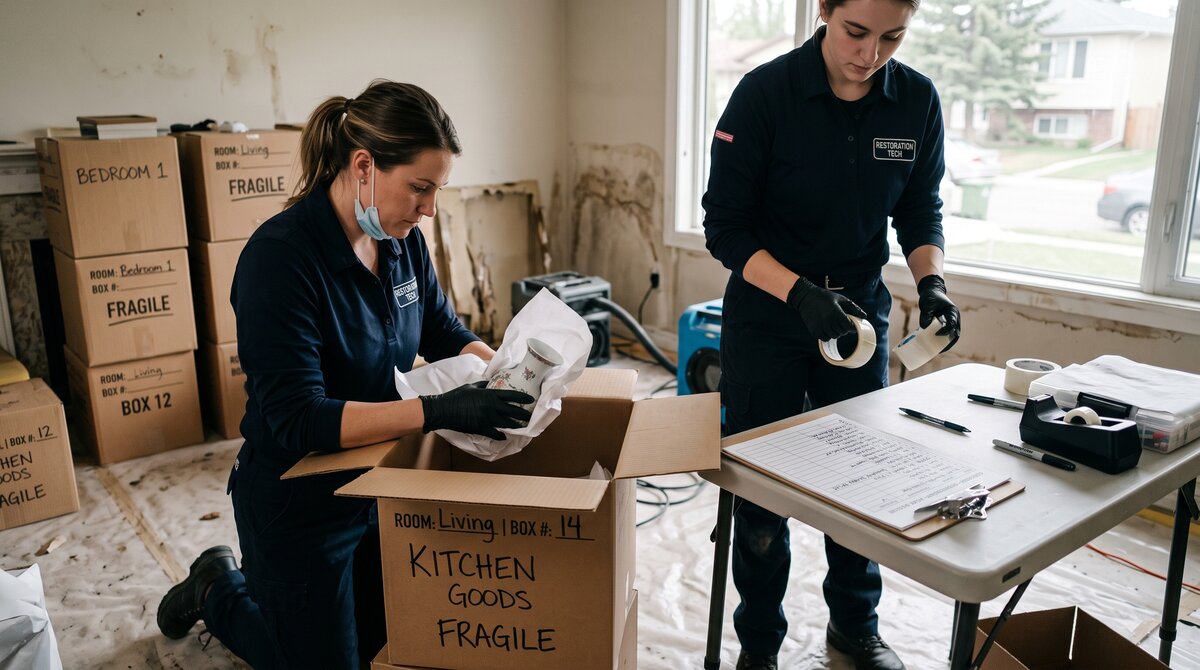
Contents restoration deals with everything that can be picked up and moved: furniture, clothing, electronics, dishes, documents, photographs, artwork and keepsakes. The aim is to restore as much as possible instead of replacing it, and to document what cannot be saved.
- Pack-out: photographing, labelling and moving belongings to a contents facility
- Photo inventory of every item for your claim
- Cleaning with the right method for each item, from ultrasonic cleaning to electronics restoration
- Odour removal with hydroxyl, ozone or fogging
- Climate-controlled storage during repairs
- Pack-back: returning and placing everything once the home is ready
Structural vs. contents restoration at a glance
| Structural restoration | Contents restoration | |
|---|---|---|
| Focus | The building | Everything inside it |
| Typical tasks | Drying, demolition, repairs, rebuild | Pack-out, cleaning, deodorizing, storage, pack-back |
| Equipment | Air movers, dehumidifiers, demolition tools | Ultrasonic tanks, electronics drying chamber, hydroxyl and ozone units |
| Where the work happens | On site | Mostly at the contents facility |
| Documentation | Scope of repairs | Item-by-item photo inventory and non-restorable list |
| When it starts | Immediately, for mitigation | Immediately, often before demolition |
How the two work together on one claim
On a typical Calgary claim, the order looks like this. The structural contractor makes the property safe and starts mitigation. The contents team packs out the belongings, photographing each item, so the crew can dry and demolish without working around furniture. While the building is repaired, contents are cleaned, deodorized and stored. When the repairs are signed off, everything is packed back.
- Emergency call and mitigation
- Contents pack-out and photo inventory
- Drying and demolition of the structure
- Contents cleaning and restoration at the facility
- Rebuild and repairs
- Pack-back and placement
Our step-by-step process shows the contents side in more detail, and our guide to how long contents restoration takes covers timing.
A typical Calgary timeline
Every claim is different, but this is how the two sides usually line up on a mid-sized fire or water loss in Calgary:
| When | Structural side | Contents side |
|---|---|---|
| Day 1 | Emergency call, board-up or water extraction | Assessment and protection of high-value and sentimental items |
| Days 1 to 3 | Drying equipment set up, moisture readings | Pack-out and photo inventory, so rooms can be emptied |
| Week 1 to 2 | Demolition of damaged materials | Sorting into restorable and non-restorable; cleaning begins |
| Weeks 2 and on | Scope approved, rebuild starts | Cleaning, deodorizing and climate-controlled storage |
| Repairs complete | Final walkthrough | Pack-back, unpacking and placement |
The contents side often finishes cleaning long before the rebuild is done, which is why storage matters on longer jobs.
How the paperwork fits together
Your adjuster sees two sets of documents on one claim. The structural contractor submits a scope of repairs for the building. The contents company submits the photo inventory, the cleaning and storage scope and the non-restorable list. Keeping them separate makes each easier to review, and it means questions about a sofa do not hold up approval of new drywall.
Signs your belongings need a contents specialist
Not every loss needs a full contents team. A small leak under a sink might only affect a few items you can clean yourself. These are the signs that the contents side of your loss is big enough, or delicate enough, to hand to a specialist:
- Smoke or soot reached more than one room, even if the fire itself was small
- Water reached carpet, furniture or boxes stored on the floor
- The structure needs demolition or drying, so rooms have to be emptied
- Electronics, documents, photographs, art or antiques were affected
- The water came from a sewer backup or overland flooding
- There is a lingering smell after the initial clean-up
- You will be out of your home while it is repaired
If two or more of those apply, a contents company will usually save more and document it better than a general clean-up.
Why a contents specialist saves more
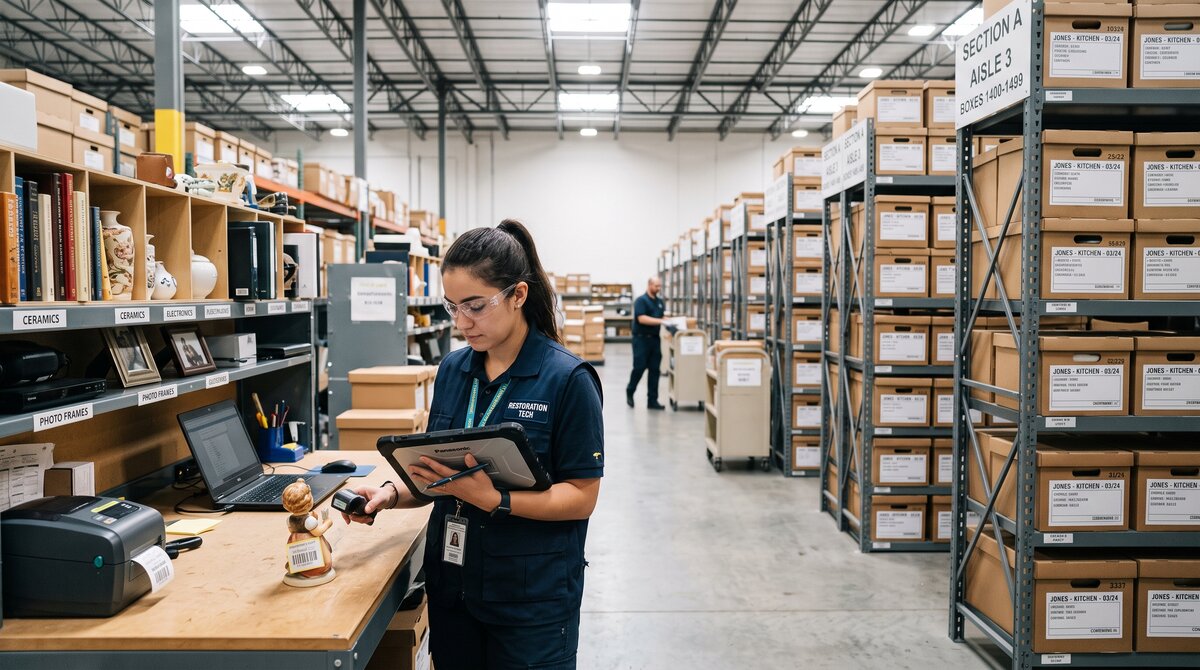
Contents work takes different skills, equipment and space than rebuilding. A specialist runs a facility built for it: tanks that clean china, tools and collectibles without scrubbing, a drying chamber for electronics, odour treatment rooms and secure vaults. That is why more items come home, and fewer become total-loss payouts.
A specialist also documents differently. Every item is recorded at pack-out and sorted into restorable and non-restorable, which gives your adjuster a clear basis for the claim and gives you a record of what you owned.
What a contents facility has that a job site doesn’t
A house under repair is the worst place to clean belongings. Dust from demolition settles on everything, there is no controlled space for odour treatment, and items get moved from room to room as crews work. A dedicated contents facility solves those problems.
| Facility capability | What it does for your belongings |
|---|---|
| Ultrasonic tanks | Clean china, crystal, tools and collectibles in every crevice without scrubbing |
| Electronic Drying Chamber | Dries and deodorizes electronics without saturating them in water |
| Textile processing | Laundering, dry cleaning and deodorizing of clothing, linens and soft goods |
| Odour treatment | Hydroxyl, ozone and fogging in a controlled space |
| Document drying | Freezing and freeze-drying of wet paper, books and photographs |
| Climate-controlled vaults | Keep restored items clean, dry and tracked until pack-back |
At Calgary Contents, pack-outs, cleaning, deodorizing and storage are handled by our own people, equipment and trucks at our facility in northeast Calgary, and clothing and textiles are cleaned with our specialist textile restoration partners.
Common mistakes in the first 48 hours
Some of the most expensive damage happens after the fire or flood, in the rush to clean up. These are the mistakes we see most often:
- Wiping soot with a damp cloth, which smears it into surfaces
- Turning on electronics to see if they work, which can short wet or soot-covered circuit boards
- Throwing things away before they are photographed, which makes them hard to claim
- Letting belongings sit in a wet or smoky house while waiting for repairs to start
- Washing smoky clothes with heat, which can set the odour permanently
- Storing wet items in plastic bins, where mould grows quickly
Our guide to what to do after a house fire walks through the first days in detail.
Questions to ask in the first few days
- Who is handling the contents, and when will they pack out?
- Where will my belongings be stored, and is the storage climate-controlled?
- Will I get a copy of the photo inventory?
- How will you decide what is non-restorable?
- Can I keep essentials such as medication, documents and valuables with me?
- Who do I call with questions about my belongings?
Frequently Asked Questions
Does my restoration contractor clean my belongings?
Some general restoration contractors offer basic contents services, but many hand contents to a specialist. A contents restoration company has the facility, equipment and processes, such as ultrasonic cleaning and an electronics drying chamber, that save more items.
Can I choose my own contents restoration company?
In most cases you can ask for a specific company, and your adjuster may also suggest one. Raise it early, before the pack-out is booked, so everyone is working from the same plan.
Who pays for contents restoration?
When the loss is covered, contents work is usually part of the contents portion of your claim. Our guide on whether insurance covers pack-out and contents cleaning in Alberta explains what to ask.
Do contents and structural work happen at the same time?
Yes. Contents usually come out first so drying and demolition can start, then cleaning and restoration happen at the contents facility while the building is repaired.
What happens to belongings that can’t be saved?
They are photographed and listed as non-restorable so they can be valued and replaced on your claim. See non-restorable items explained.
Can the same company do both structural and contents restoration?
Some do, but many structural contractors bring in a contents specialist because contents work needs its own facility and equipment. Calgary Contents focuses on belongings and works alongside your structural contractor.
Will my belongings be safe while the house is being repaired?
Yes. Packed-out items are tracked by inventory and kept in secure, climate-controlled storage until the home is ready, away from dust and demolition.
How long does the contents side take?
Cleaning often finishes in a few weeks, but belongings stay in storage until the repairs are done. See how long contents restoration takes.
Not sure who is handling your belongings? Calgary Contents works alongside your restoration contractor and your adjuster. Call (403) 407-0208 any time, or contact us online. Restoration contractors can also see how we work with contractors.