When a pipe bursts or a sprinkler head goes off in a multi-unit building, water rarely stays in one suite. It runs down through ceilings and walls into the units below, and sometimes into storage lockers, hallways and the parkade. For a property manager or condo board, the building is only half the job. Each affected unit has its own belongings, its own occupants and, often, its own insurance policy.
This guide is for Calgary property managers, landlords and condo boards. It explains who is usually responsible for what, what to do in the first hours, how to keep belongings and claims separate across several units, and how a contents company can take that part of the job off your plate.
Key Takeaways
- In most buildings, the building policy covers the structure and tenants’ own policies cover their belongings.
- Notify every affected unit quickly, and tell occupants not to throw anything out.
- Each unit needs its own inventory, labels and storage so several claims stay separate.
- Pack-outs in occupied buildings need planning for elevators, loading and access.
- One contents company working across all units keeps communication simple.
Table of Contents
- Who is usually responsible for what
- For condo boards: deductibles and owner policies
- The first hours after a water loss
- Managing belongings across several units
- Storage lockers and common areas
- What to tell tenants and owners
- When occupants have to move out
- Pack-outs in occupied buildings
- Documentation that keeps several claims straight
- Working with several insurers at once
- What a typical timeline looks like
- Furnished rentals, vacant units and turnovers
- Reducing the risk of the next one
- How Calgary Contents works with property managers
- Frequently Asked Questions
Who is usually responsible for what
| What was damaged | Usually covered by |
|---|---|
| Common property and building structure | The condo corporation’s or landlord’s building policy |
| Improvements an owner made to a condo unit | The unit owner’s policy, depending on bylaws and the corporation’s standard unit description |
| A tenant’s own belongings | The tenant’s own tenant insurance |
| Contents supplied with a furnished rental | The landlord’s policy |
| Items in shared storage rooms | The owner of each item, under their own policy |
Responsibilities vary with your bylaws, leases and policy wording, so treat this as a starting point and confirm with your broker and adjuster.
For condo boards: deductibles and owner policies
Condominium losses often involve the corporation’s deductible, which can be large. In Alberta, the Condominium Property Act and your corporation’s bylaws set out how deductibles are handled and when they can be charged to an owner. Encourage owners to carry unit owner insurance with deductible coverage, and to keep their own contents insurance current.
Keeping the contents side well documented helps here too. When each unit’s belongings are inventoried separately, it is easier to see what belongs to which claim and to answer owners’ questions.
The first hours after a water loss
- Stop the water at the source and shut off the affected supply
- Check every unit below and beside the source, including storage areas and the parkade
- Notify affected occupants and owners in writing
- Photograph the damage in each unit and common area
- Report the loss to the building insurer and remind occupants to call their own insurers
- Bring in a restoration contractor for drying and a contents company for belongings
- Arrange temporary accommodation for anyone whose unit is not livable

Managing belongings across several units
The hardest part of a multi-unit loss is keeping everything straight. Belongings from several homes are being moved, cleaned and stored at the same time, often under different insurance claims. A clear system prevents mix-ups and makes each claim easier to settle.
- Give each unit its own inventory and claim reference
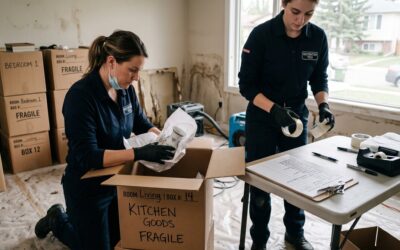
- Label every box and item by unit at pack-out
- Store each unit’s belongings separately
- Get each occupant’s consent before their belongings are moved
- Keep a shared schedule of which units are being packed, cleaned or returned
- Name one contact person for occupants’ questions
Storage lockers and common areas
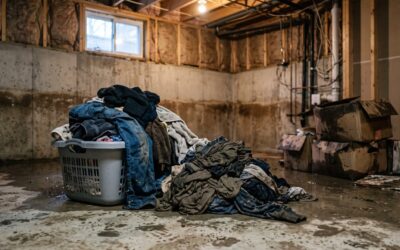
Water that reaches a storage room or parkade can affect dozens of owners at once, many of whom do not visit their locker often. Post a notice, contact every locker holder, and photograph each locker before anything is moved. Boxes stored directly on the floor are usually the first to be lost, so a pack-out of storage areas should start quickly. Common-area furniture and décor belong to the building and go on the building claim.
What to tell tenants and owners
Occupants are often stressed and unsure what happens next. A short written notice answers most of their questions and keeps them from making costly mistakes, such as throwing out belongings before they are documented.
- What happened, and which units are affected
- That their belongings are usually covered by their own tenant or unit owner insurance, and they should call their insurer
- Not to throw anything out until it has been photographed
- To keep essentials, medication, documents and valuables with them
- Who the contents company is and how belongings will be tracked
- Who to contact with questions
Our guide to what insurance covers for pack-out and contents cleaning is a good link to share with occupants.
When occupants have to move out
If a unit is not livable, occupants may need somewhere else to stay. Tenants and owners should ask their own insurers about additional living expenses coverage. Help them take what they need for daily life, and let the contents company document and pack the rest, so nothing is lost or left in a unit during demolition.
Pack-outs in occupied buildings
Packing out a unit in a building where people still live and work takes planning. Book the elevator and loading area, protect hallway floors and walls, and schedule the work around quiet hours where possible. Arrange keys or access for each unit, and keep doors secure while crews are moving belongings. The more of this is set up in advance, the faster the pack-out goes and the less it disrupts the rest of the building.
Documentation that keeps several claims straight
Each insurer needs its own record of what was in the unit, what can be restored and what cannot. A photo inventory taken unit by unit at pack-out gives every adjuster a clear basis for their part of the loss, and gives you a record if questions come up later about what was where.
Adjusters can see how we work with insurers, and restoration contractors can see how we coordinate with the drying and rebuild crew.
Working with several insurers at once
A single burst pipe can involve the building insurer, several unit owner policies and several tenant policies, each with its own adjuster. Adjusters move faster when they get documentation for their insured only, in a format they can review. A contents company that keeps separate inventories, scopes and non-restorable lists for each unit saves everyone time, including you, because fewer questions come back to the property manager.
What a typical timeline looks like
| Stage | Building side | Contents side |
|---|---|---|
| Day 1 | Water stopped, extraction and drying set up | Assessment and protection of belongings in affected units |
| Days 1 to 3 | Moisture mapping across units | Pack-out and photo inventory, unit by unit |
| Weeks 1 to 2 | Removal of wet materials | Cleaning and restoration; non-restorable lists per unit |
| Repairs | Rebuild of affected units and common areas | Belongings held in climate-controlled storage |
| Completion | Sign-off, unit by unit | Pack-back as each unit is ready |
See how long contents restoration takes for more on timing.
Furnished rentals, vacant units and turnovers
Furnished rentals add another layer, since the owner’s furniture and the tenant’s belongings are under different policies. Inventory them separately from the start. Vacant units are simpler, but anything left in storage lockers or the unit still needs to be documented. If the loss happens during a turnover, it can be a good moment to clean and store the owner’s contents while repairs are done.
Reducing the risk of the next one
- Install water sensors and automatic shut-off valves near water heaters and laundry
- Replace rubber washing machine hoses with braided lines
- Inspect plumbing, sprinkler heads and balconies on a schedule
- Ask tenants to keep belongings off storage-room floors
- Require tenant insurance in leases where you can
- Keep an up-to-date contact list for every unit and owner
How Calgary Contents works with property managers
We handle the contents side across every affected unit: pack-out, unit-by-unit photo inventory, cleaning, deodorizing, climate-controlled storage and pack-back. We work with your restoration contractor and with each occupant’s insurer, using our own people and trucks. See commercial contents restoration and our process.
Frequently Asked Questions
Who pays to pack out a tenant’s belongings?
Usually the tenant’s own insurance, under the contents section of their tenant policy. The building owner’s policy covers the building and any contents the owner supplied, such as appliances in a furnished unit.
Can a tenant refuse a pack-out?
Tenants decide what happens to their own belongings. If a tenant declines, record it in writing and make sure they understand the risk of leaving belongings in a wet unit during drying and demolition.
What if a tenant has no insurance?
They would normally pay for contents work themselves, or move their own belongings. We can talk them through the options and give them a scope so they can decide.
Can you pack out several units at once?
Yes. Each unit gets its own crew plan, inventory and labels, so belongings stay separated from pack-out to pack-back.
How do you keep belongings from different units separate?
Every item is photographed and labelled by unit at pack-out, and each unit is stored and tracked separately until it goes back.
Do tenants need to move out?
Only if their unit is not safe or livable during repairs. Many units below or beside the source only need some belongings moved while drying happens.
Do you work with condo corporations?
Yes. We work with condo boards, property managers and the restoration contractor on the building, and with each owner’s or tenant’s insurer on the contents.
Can belongings go straight back into a unit after drying?
Only once repairs are finished and the unit is clean. Belongings returned to a unit that is still being repaired get dusty or damaged again.
Managing a water loss across several units? One call covers the contents side for every unit. Call (403) 407-0208 any time, or contact us online.