Cigarette smoke smell lingers because it is not just a smell. Smoke leaves a sticky residue of tar and nicotine on walls, ceilings, fabric and belongings, and that residue keeps releasing odour for months or years. Removing it means cleaning the residue off every surface it touched, cleaning or deodorizing soft goods, and only then using odour treatment for what is left. Air fresheners and paint on their own will not do it.
Whether you have bought a home from a smoker, are turning over a rental, or are clearing out a relative’s belongings, this guide explains where the smell hides, what you can do yourself, what does not work and how professionals remove it from a home and its contents.
Key Takeaways
- Cigarette odour comes from a sticky residue, so it has to be cleaned off, not covered up.
- The residue hides on walls, ceilings, fabrics, ducts and inside belongings.
- Hard surfaces and most clothing clean well; heavily smoked upholstery and carpet are harder.
- Paint, candles and sprays only mask the smell for a while.
- Professional deodorizing works best after thorough cleaning.
Table of Contents
- Why cigarette smoke smell lingers
- Where the smell hides
- Furnace, ducts and air flow
- Moving into a smoker’s home or rental
- Cleaning belongings that smell of smoke
- Clearing out a smoker’s belongings
- Step by step: what you can do yourself
- What doesn’t work
- How professionals remove cigarette odour
- Thirdhand smoke and your household
- Is cigarette odour covered by insurance?
- How long it takes
- Frequently Asked Questions
Why cigarette smoke smell lingers
When tobacco burns, it releases fine particles and sticky compounds that drift through the air and settle on every cooler surface. Over time they build into a yellow-brown film. On hard surfaces the film is easy to see on light switches, window frames and ceilings. On soft materials, such as carpet, upholstery, drapes and clothing, the residue soaks into the fibres where you cannot see it.
That residue is sometimes called thirdhand smoke. It keeps giving off odour long after anyone has smoked in the space, and warmth and humidity make it worse. That is why a home that seemed fine in winter can smell strongly on the first warm day, or when the furnace kicks on in the fall.
Where the smell hides
- Walls and ceilings, especially in the rooms where people smoked
- Window coverings, blinds and window frames
- Carpet, underpad and area rugs
- Upholstered furniture, mattresses and pillows
- Closets, clothing and linens
- Furnace filters and ductwork
- Light fixtures, lampshades and ceiling fans
- Inside drawers, cabinets and cupboards
- Electronics, whose cooling fans pull smoke inside
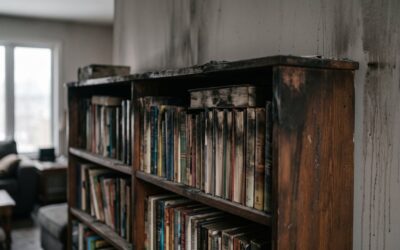
- Books, papers and photographs
Missing even one of these can keep the smell going, which is why spot-cleaning one room rarely works.
Furnace, ducts and air flow
Forced-air heating spreads cigarette odour through every room. Smoke is pulled into return vents, residue coats the inside of ducts, and the furnace filter traps particles that keep releasing odour each time the fan runs. Replace the filter before and after cleaning, and have the ducts assessed if the home was smoked in for years. Cleaning every room and then running a dirty system will put the smell straight back.
Moving into a smoker’s home or rental
If you have bought or rented a home where people smoked, the best time to deal with it is before your own belongings arrive. Once your furniture, clothing and boxes are inside, they start absorbing the odour too.
- Replace the furnace filter and have the ducts assessed
- Wash walls, ceilings, trim and cabinets with a degreasing cleaner
- Seal walls with an odour-blocking primer before painting
- Clean or replace carpet and underpad in the worst rooms
- Clean or replace window coverings
- Air the home out, then check again with the windows closed for a day
Landlords and property managers turning over a unit after a smoking tenant face the same job. Our page on commercial and multi-unit contents work explains how we support property managers.
Cleaning belongings that smell of smoke
| Item | What usually works | Notes |
|---|---|---|
| Clothing and linens | Washing, sometimes two or three times | Dry-clean-only items need professional cleaning |
| Upholstered furniture | Cleaning to the fabric code, then deodorizing | Heavily smoked foam may hold odour |
| Hard goods: dishes, décor, frames | Washing with a degreasing cleaner | Detailed items suit ultrasonic cleaning |
| Books and papers | Airing, absorbents and professional deodorizing | See smoke smell in books |
| Electronics | Professional internal cleaning | Residue builds up on fans and circuit boards |
| Art and framed pieces | Professional cleaning | Do not wipe canvases or prints |
For furniture, our guide to furniture restoration covers what can be done with different materials.
Clearing out a smoker’s belongings
Families often face cigarette odour when they are sorting the belongings of a parent or relative who smoked. It helps to sort first and clean second. Decide what you want to keep, what can go to family, and what can be donated, then focus cleaning effort on the keepers.
- Wash clothing and linens before giving them away; many donation centres will not accept items that smell of smoke
- Clean hard goods such as dishes, figurines and frames with a degreasing cleaner
- Set aside photographs, letters and documents for gentle professional deodorizing rather than washing
- Keep cleaned items away from those still waiting to be cleaned
- For heirlooms and furniture you want to keep, ask about professional cleaning and deodorizing
Our guide to antique and heirloom restoration covers more delicate pieces.
Step by step: what you can do yourself
- Open windows and run fans to move fresh air through the home
- Replace the furnace filter, and again after cleaning
- Wash hard surfaces from the ceiling down with a degreasing cleaner and clean water rinse
- Launder washable textiles, and repeat for items that still smell
- Clean carpets with hot water extraction, or replace the worst areas
- Put open containers of baking soda or activated charcoal in closets and drawers
- Clean inside cabinets, closets and drawers, not just the outsides
- Check again after the home has been closed up for a day
Light, short-term odour often responds to this. Years of indoor smoking usually needs professional help with at least part of the job.
What doesn’t work
- Air fresheners, candles and plug-ins: they add scent on top of the odour
- Paint without washing and sealing: nicotine stains and smell bleed through
- Running a rental ozone generator in an occupied home: ozone is a lung irritant and should only be used in an empty space by a trained technician
- Cleaning one room: residue in ducts and other rooms will bring the smell back
- Storing smoky items with clean ones: the odour transfers
How professionals remove cigarette odour
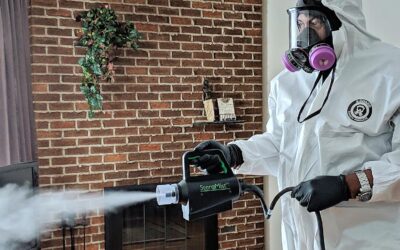
Professional odour removal follows the same order every time: remove the residue, then treat what is left. Hard surfaces and belongings are cleaned with products suited to the material. Soft goods are laundered, dry cleaned or deodorized at a contents facility. Then the space and contents are treated with hydroxyl, ozone or fogging, depending on the materials and whether anyone is living there.
Our guide to ozone vs. hydroxyl vs. fogging explains each method. Calgary Contents deodorizes belongings at our facility and offers fogging services for homes and businesses. See smoke odour removal for how we approach smoke of all kinds.

Thirdhand smoke and your household
Research into thirdhand smoke suggests the residue left on surfaces can contain harmful chemicals. Babies and young children are the most exposed, because they crawl on floors, touch surfaces and put things in their mouths. If you are moving young children into a former smoker’s home, clean thoroughly before you move in rather than living with the smell while it fades.
Is cigarette odour covered by insurance?
Usually not. Home insurance covers sudden, accidental events, and odour from years of smoking is gradual. If you bought a home and the smell was not disclosed, that is a question for a real estate lawyer rather than your insurer. A fire caused by a cigarette is different: it is normally handled as a fire claim, with the same contents cleaning and odour removal as any other fire. See what can and can’t be saved after smoke damage.
How long it takes
A light odour from occasional smoking can often be cleared in a few days of cleaning and airing. A home where someone smoked indoors for years usually takes longer, with more than one round of cleaning and deodorizing, and some soft goods may not come back to a smell-free state. The deciding factor is how thoroughly the residue is removed, not how strong the treatment is.
Frequently Asked Questions
Can cigarette smoke smell ever be fully removed?
In most homes, yes, once the residue is cleaned from every surface and soft goods are cleaned or replaced. Heavy, long-term smoking can need several rounds of cleaning and deodorizing, and walls may need a sealing primer before paint.
Does painting get rid of cigarette smell?
Not on its own. Paint over nicotine residue lets the smell and yellow stains bleed through. Walls need to be washed first and then sealed with an odour-blocking primer.
Will an air purifier remove cigarette smell?
An air purifier with a carbon filter can reduce odour in the air, but it cannot remove residue stuck to walls, fabric and belongings, so the smell keeps coming back.
Can clothes that smell of cigarette smoke be saved?
Usually, yes. Most clothing responds well to washing, sometimes more than once, and dry-clean-only items can be professionally cleaned and deodorized. See textile restoration.
How long does professional odour treatment take?
It depends on how heavy the smell is and what it is in. Belongings may need several days of treatment after cleaning, and hydroxyl treatment in an occupied space can run for days.
Is cigarette smoke odour covered by home insurance?
Usually not. Smoke from years of smoking is gradual, not a sudden event. A fire started by a cigarette is different and is normally treated as a fire claim.
Can books and photos be deodorized?
Often, yes. Paper absorbs odour deeply, so it needs time and the right treatment rather than washing. See how to get smoke smell out of books.
Should I replace the carpet in a smoker’s home?
If years of smoke have reached the underpad, replacing the carpet and pad in the worst rooms is often more effective than repeated cleaning. Lighter odour can respond to hot water extraction.
Smoke smell that will not go away? We clean and deodorize belongings and treat homes and businesses for odour. Call (403) 407-0208 or contact us online.