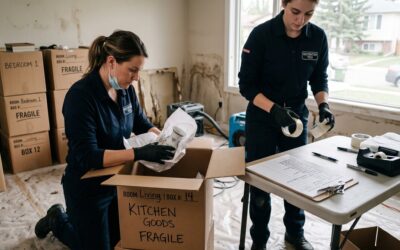
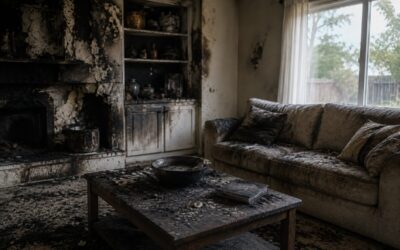
You can open every window and spray every fabric freshener in the house, and the couch still smells like smoke the moment you sit down. Whether the smell came from a kitchen fire, wildfire smoke drifting into Calgary, or a used sofa that belonged to a smoker, learning how to get smoke smell out of a couch comes down to one fact: the odour is not on the surface, it is inside the fabric, the foam and the frame.
The good news is that a lot of smoke smell can be removed at home with patience and the right order of steps. The bad news is that the most common fixes, like scented sprays and steam cleaning, can make things worse. This guide walks through why couches hold smoke, what to try at home, what to avoid, and when professional deodorization is the only thing that will reach the smell.
Table of Contents
- Why couches hold on to smoke smell
- What kind of smoke are you dealing with?
- Check the cleaning code first
- How to get smoke smell out of a couch at home
- What not to do
- When the smell is in the foam: professional treatment
- Restore or replace, and what insurance covers
- Why Calgary Contents is the right choice for smoke odour
- Frequently Asked Questions
Key Takeaways
- Smoke odour sits in the fabric, the cushion foam and the frame, so surface sprays only mask it for a few hours.
- Check the cleaning code on the couch tag before using any liquid; the wrong cleaner can stain or shrink upholstery.
- Airing out, HEPA vacuuming, baking soda and washing removable covers handle light, recent smoke smell.
- Do not steam clean a sooty couch or run an ozone generator in an occupied home.
- Smell that returns within days is coming from the foam, and needs professional deodorization such as hydroxyl treatment.
Why couches hold on to smoke smell
Smoke is made of tiny particles and gases. The particles settle on and between fabric fibres, and the gases soak into anything porous. A couch is almost entirely porous: woven or textured upholstery, a thick layer of polyurethane foam in every cushion, batting over the arms and back, and often a wood frame underneath. Each layer absorbs odour at a different depth.
That is why a couch can smell fine for a day after cleaning and then start smelling again. Warmth, humidity and body heat from sitting on it release odour trapped in the foam back up through the fabric. Removing smoke smell properly means working from the surface inward, and knowing when you have reached the limit of what household methods can do.
What kind of smoke are you dealing with?
The source of the smoke changes how hard the smell will be to remove.
- Wildfire smoke is usually a lighter, recent exposure. Calgary has had several smoky summers from fires in B.C. and northern Alberta, and couches near open windows or in homes with older furnace filters pick up the smell. It often responds well to airing, vacuuming and baking soda. Our guide to wildfire smoke damage to belongings covers the rest of the house.
- Cigarette or cannabis smoke builds up over months or years and leaves a sticky residue deep in the fibres and foam. A used couch from a smoker’s home is one of the hardest odours to remove, and it often needs professional treatment. See our guide to removing cigarette smoke smell from a home.
- House fire smoke carries soot and acidic residue, especially when synthetic materials burned. The odour is strong and the residue can stain and damage fabric if it is not removed the right way. The IICRC S700 standard for fire and smoke damage restoration treats this kind of residue as something to remove, not cover up.
If the smoke came from a fire in your home, start with our guide on what can and can’t be saved after smoke damage before you clean anything, and document the damage for your insurer first.
Check the cleaning code first
Most couches have a tag under a cushion or along the base with a cleaning code. It tells you which cleaners the fabric can safely take, and ignoring it is the fastest way to leave water rings, shrink a cover or strip the colour.
| Code | What it means | Safe for smoke odour |
|---|---|---|
| W | Water-based cleaners are safe | Baking soda, vinegar mist, mild upholstery shampoo |
| S | Solvent-based cleaners only | Baking soda and vacuuming; avoid water and vinegar |
| W/S | Either water or solvent cleaners | Most home methods, tested on a hidden spot |
| X | Vacuum only, no liquid cleaners | Vacuuming and airing only; call a professional |
| Leather | Leather cleaner and conditioner only | Wipe with leather cleaner, air out, condition |
If there is no tag, treat the couch as code S and test anything on a hidden area, such as the back of the skirt or the underside of a cushion, before using it where it shows.
How to get smoke smell out of a couch at home
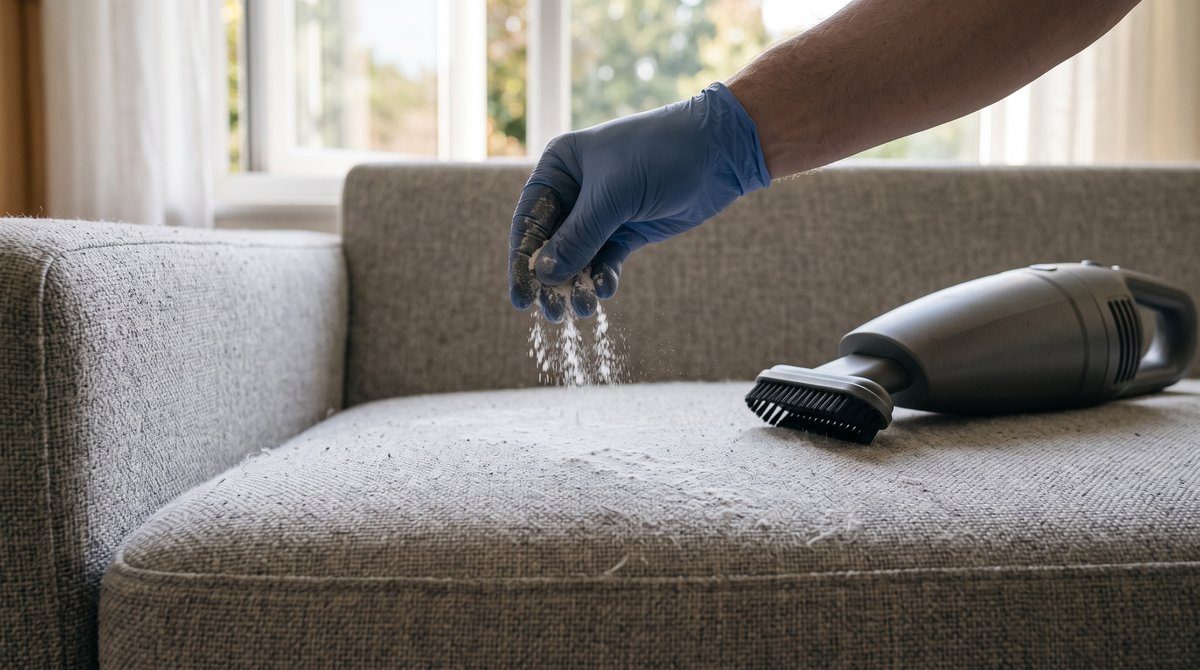
Work through these steps in order. Each one reaches a little deeper than the last, and you can stop as soon as the smell is gone.
- Air out the room. Open windows on a clear day and run a fan to move air across the couch. Calgary’s low humidity helps odour escape. Stand removable cushions on end so air reaches every side. Skip this step on smoky days, when outdoor air will add more odour.
- Vacuum thoroughly with a HEPA vacuum. Use the upholstery attachment on every surface, then the crevice tool along seams, under cushions and down the back. This lifts the loose particles that hold much of the smell. If there is visible soot, vacuum without brushing so you do not grind it into the weave.
- Wash removable covers. If the cushion covers have zippers and the care label allows machine washing, wash them in cold water on a gentle cycle and air dry them. Hot water and dryer heat can shrink covers so they no longer fit.
- Use baking soda. Sprinkle an even layer over the seat, back, arms and cushions, work it lightly into the fabric with a soft brush, and leave it for at least several hours, ideally overnight. Then vacuum it out completely. Repeat if the smell is fading but not gone.
- Mist with diluted white vinegar (code W or W/S only). Mix equal parts white vinegar and water in a spray bottle and lightly mist the fabric without soaking it. The vinegar smell fades as it dries and takes some of the smoke odour with it. Test a hidden spot first.
- Absorb what is left. Place bowls of activated charcoal around and under the couch, and run a portable HEPA air purifier in the room for a few days. Both keep pulling odour out of the air as the couch slowly releases it.
For a leather couch, wipe it down with a leather cleaner, let it air out, and finish with a leather conditioner, since smoke residue and repeated cleaning both dry leather out.
Smell still coming back? That usually means it is in the foam. Calgary Contents removes smoke odour from sofas and upholstered furniture with hydroxyl and fogging treatment. Call (403) 407-0208.
What not to do
- Do not rely on fabric fresheners. Scented sprays add a second smell on top of the smoke. When the perfume fades, the smoke is still there, and some sprays leave a residue that traps more odour.
- Do not steam clean a sooty couch. Heat and moisture can set soot and smoke residue into the fibres and stain light fabric. Dry soot removal has to come first.
- Do not soak the cushions. Water that reaches the foam takes a long time to dry and can lead to mould, which adds a musty smell to the smoky one.
- Do not run an ozone generator yourself. Ozone can remove odour, but it is a lung irritant. Health Canada advises against using ozone generators in homes. Where ozone is used in restoration, it is done by professionals in an unoccupied space.
- Do not mix cleaning products. Vinegar and bleach, in particular, should never be combined.
When the smell is in the foam: professional treatment
If you have worked through the at-home steps and the smell fades for a day or two and then comes back, the odour is coming from the cushion foam, the batting or the frame. Household methods cannot reach that deep without soaking the couch. At that point the choice is professional deodorization or replacement.
Professional smoke odour removal combines cleaning and deodorization:
- Dry soot removal and deep cleaning matched to the fabric’s cleaning code, to take out the residue that produces the smell.
- Hydroxyl treatment, which breaks down odour molecules in the air and in porous materials over several days.
- Thermal fogging, where a deodorizing fog penetrates fabric and foam the way the smoke did. Our post on fogging vs traditional cleaning explains when fogging is the right tool.
You can read more about how the process works in our post on how deodorization and decontamination work. Our smoke odour removal service treats furniture and whole homes, and our comparison of ozone, hydroxyl and fogging explains which treatment fits.
Restore or replace, and what insurance covers
A good-quality couch with a solid frame is usually worth restoring, especially if it is expensive, custom or has sentimental value. An inexpensive couch with heavy odour in the foam, or one soaked through by firefighting water, may cost more to restore than to replace. Our guide to furniture restoration after water or fire damage goes deeper into how that decision is made.
If the smoke came from a fire in your home, including a neighbour’s fire or a wildfire, smoke damage to furniture is typically part of the contents coverage on your home policy. Photograph the couch and the tag before cleaning it, keep receipts for anything you spend, and talk to your adjuster before you throw anything away. When restoration is possible, insurers often prefer it to replacement. Smoke from cigarettes or cannabis is generally not covered.
Why Calgary Contents is the right choice for smoke odour
Calgary Contents restores the belongings inside a home after fire, smoke and water damage. We remove smoke odour, water stains and mould from sofas, chairs, beds and other upholstered and wooden furniture, and our deodorization and decontamination service uses hydroxyl technology and fogging to treat set-in odour. Our team holds IICRC certifications including odour control and fire and smoke restoration.
After a fire, our fire and smoke damage contents service can pack out, clean and deodorize furniture at our Calgary facility while your home is repaired, and document anything that cannot be restored for your insurance claim. We offer rapid response across Calgary, Rocky View County, Airdrie, Beiseker, Chestermere, Cochrane, Crossfield and Irricana.
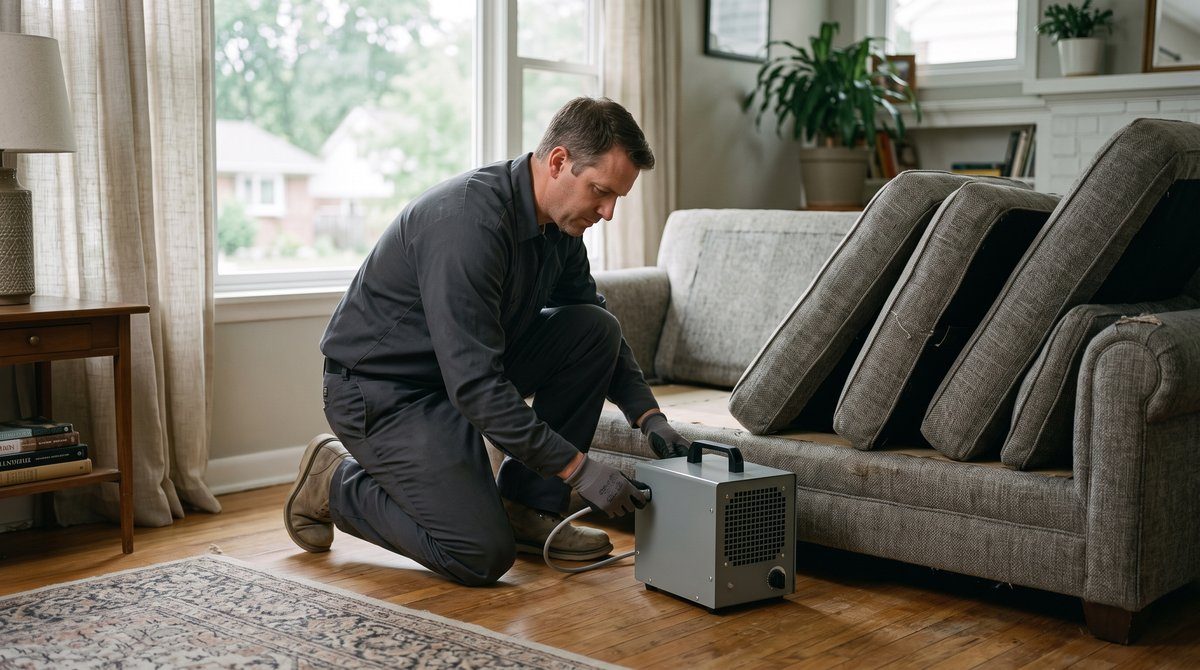
Get the smoke smell out for good. Talk to Calgary Contents about your couch and other smoke-damaged furniture. Call (403) 407-0208 or contact us online.
Conclusion
Learning how to get smoke smell out of a couch is really learning how deep the smell goes. Check the cleaning code, then work from the surface inward: air it out, HEPA vacuum, wash removable covers, use baking soda, mist with diluted vinegar if the fabric allows it, and let charcoal and an air purifier finish the job. Skip the fresheners, steam cleaners and home ozone machines. If the smell keeps coming back after all of that, it is in the foam, and professional deodorization is the way to save the couch.
Frequently Asked Questions
How long does it take to get smoke smell out of a couch?
Light, recent smoke smell from wildfire smoke can clear in a day or two of airing, vacuuming and baking soda. Years of cigarette smoke or smoke from a house fire can take several rounds of treatment, and often needs professional deodorization over several days.
Does baking soda get smoke smell out of a couch?
Baking soda absorbs odour near the surface and works well on light smoke smell. Leave it on overnight and vacuum it out thoroughly. It will not reach odour trapped deep in the cushion foam.
Can I use vinegar on my couch?
Only if the cleaning code is W or W/S. Mix equal parts white vinegar and water, test on a hidden spot, and mist lightly without soaking. Do not use vinegar on code S or X fabrics, or on leather.
Is it worth buying a used couch that smells like smoke?
Be cautious. Cigarette smoke odour builds up in the foam over years and is one of the hardest smells to remove. Unless the couch is high quality or you plan to have it professionally deodorized, the smell may never fully go away.
Will steam cleaning remove smoke smell from a couch?
Steam cleaning is not a good first step for smoke. On a couch with soot, heat and moisture can set the residue and stain the fabric. Dry soot removal and deodorization should come first, and any wet cleaning should follow the fabric’s cleaning code.
Does home insurance cover a couch damaged by smoke?
Smoke damage from a fire, including a neighbour’s fire or a wildfire, is typically part of the contents coverage on a home policy. Photograph the couch before cleaning it and speak to your adjuster. Smoke from smoking is generally not covered.