After a fire or flood damages your belongings, one of the first questions you will ask is simple: how long until I get my things back? Contents restoration usually takes anywhere from a few days for a small job to several weeks — and occasionally a few months for a whole-home loss — depending on the volume of items, the type of damage, and how quickly your insurance approves the work. This Calgary guide breaks down each phase of the pack-out timeline, explains what drives the schedule, and shows you how to keep your restoration moving so you are reunited with your belongings as soon as possible.
Table of Contents
Key Takeaways
- Most contents restoration projects take from a few days to several weeks, with large or whole-home losses sometimes running a few months.
- The pack-out itself usually takes one to three days, while cleaning, restoration, and storage make up the bulk of the timeline.
- The biggest delays are insurance approval and waiting for structural repairs to finish before pack-back.
- A detailed photo inventory at the start speeds up both the restoration and the insurance claim.
- Items are only returned (packed back) once your home is repaired and ready, which ties the contents timeline to the building timeline.
How long contents restoration typically takes
Contents restoration typically takes from a few days to several weeks, and the honest answer is that it depends on scope. A single room of smoke-damaged belongings might be cleaned and returned within one to two weeks, while a whole-home fire loss with thousands of items can take one to three months from pack-out to pack-back. The cleaning of your items is rarely the bottleneck — coordination, insurance, and structural repairs usually are.
It helps to separate two timelines: how long it takes to clean and restore your belongings, and how long until they are returned to your home. The first is driven by volume and damage; the second waits on your property being repaired and ready. Understanding this distinction sets realistic expectations from day one. Our complete guide to contents pack-out services in Calgary walks through the full process in detail.
The contents restoration timeline, phase by phase
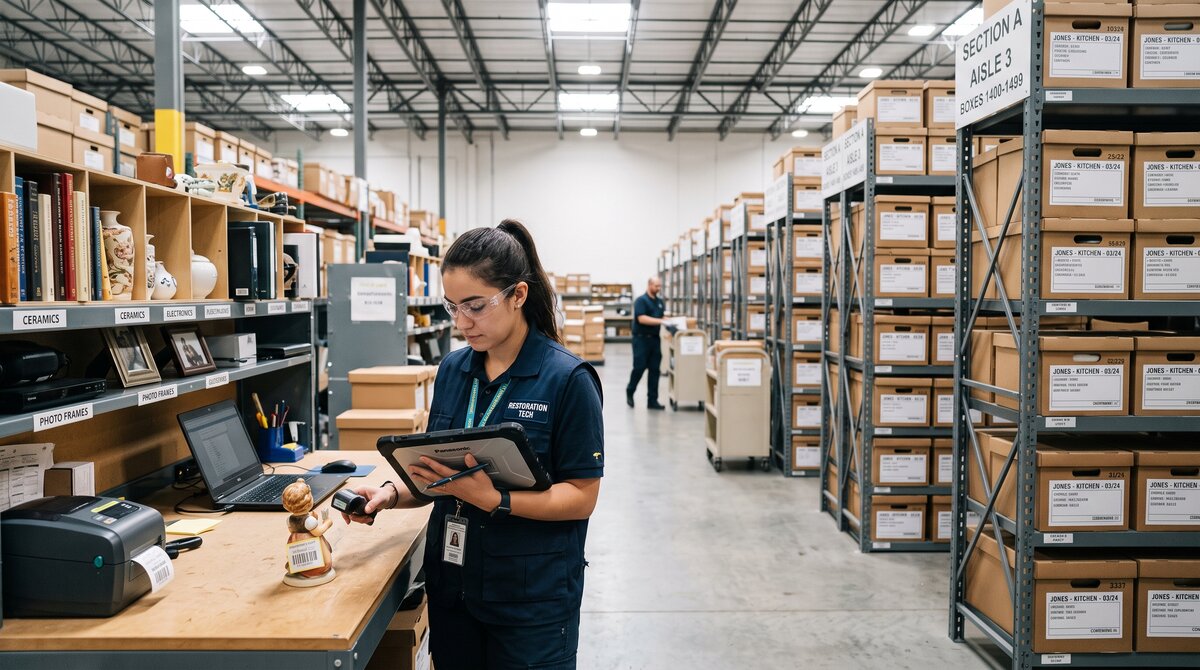
Contents restoration moves through distinct phases. Knowing what each one involves — and roughly how long it takes — helps you see where your project is and what comes next.
| Phase | Typical duration | What happens |
|---|---|---|
| Assessment & inventory | 1-2 days | Damage triage and full photo inventory of every item |
| Pack-out | 1-3 days | Items carefully packed and transported to the facility |
| Cleaning & restoration | 1-4 weeks | Ultrasonic, ozone, and specialized cleaning of contents |
| Storage | Varies | Restored items held safely until your home is ready |
| Pack-back | 1-2 days | Items returned and placed back in your repaired home |
The assessment and photo inventory phase is short but critical — it documents condition for your insurer and sets up the whole project. The cleaning phase is where most of the calendar time goes, because delicate items, electronics, and heavily soiled materials each need their own process. Storage duration is open-ended because it tracks your home’s repair schedule.
What affects how long it takes
Several factors determine where your project lands on the timeline. The volume of belongings is the biggest one — a few hundred items move far faster than a fully furnished home. The type of damage matters too: water damage demands speed to prevent mould, while heavy smoke and soot require more intensive, repeated cleaning.
Other drivers include how many items are delicate or high-value (each requiring careful, individual treatment), whether contamination is present, and how quickly decisions get made about what to restore versus replace. Sorting restorable from non-restorable items early keeps things moving — our guides on contents restoration vs. replacement and understanding non-restorable items help you make those calls without slowing the project.
How insurance affects the timeline
Insurance is one of the most common reasons contents restoration takes longer than people expect. Work often cannot begin in full until your insurer authorizes the scope, and approvals for high-value items, replacements, or additional cleaning can add days or weeks. A thorough photo inventory submitted early is the single best way to keep approvals moving.
Good documentation prevents back-and-forth that stalls a claim. When every item’s condition is catalogued from the start, your adjuster can make decisions quickly, and disputes over what was damaged largely disappear. Our guide on how to file an insurance claim for damaged contents in Alberta shows exactly what to prepare so your claim — and your restoration — does not get stuck waiting.
How to speed up your contents restoration
You can do several things to keep your restoration on the fast track. Act quickly after the damage so items are packed out before secondary problems like mould set in. Choose a contents specialist with their own facility, equipment, and trucks, so nothing is delayed by subcontracting. And make decisions promptly when asked about restore-versus-replace choices.
Most importantly, lean on the photo inventory. Having a complete, documented record up front speeds the insurance approval and prevents the rework that drags projects out. Staying responsive to your restoration team and adjuster — answering questions the same day when you can — often shaves real time off the total. Our moving and storage services keep your restored items secure for exactly as long as your home repairs require, so the contents side is never the thing holding up your move back in.
What to expect while your items are away
While your belongings are at the restoration facility, they are cleaned, deodorized, restored, and stored in a controlled environment until your home is ready. Reputable companies keep you informed at each stage and maintain the photo inventory as a running record of what has been treated and its condition. You should never be left wondering where your things are.
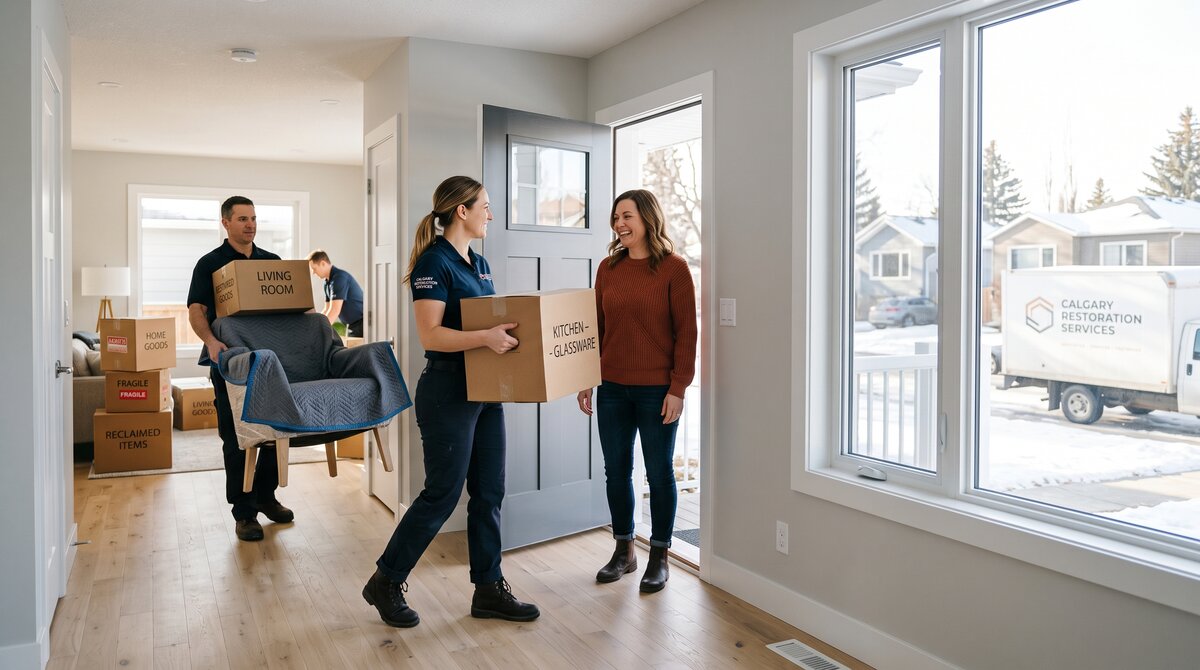
When your home’s repairs are complete, the pack-back phase returns everything to its place, usually within a day or two. Because the contents timeline depends on the building timeline, staying in touch with both your restoration team and your general contractor helps the two finish in sync — so your restored belongings come home the moment your house is ready for them.
Why Calgary Contents is the right choice for your contents restoration
Calgary Contents is a dedicated contents restoration company serving Calgary, Airdrie, Chestermere, Cochrane, and the surrounding area. We focus exclusively on belongings — not the building — which means pack-out, cleaning, ultrasonic restoration, storage, and pack-back are all handled in-house by our own people, equipment, and trucks. That control is exactly what keeps timelines short and predictable.
From the first photo inventory to the final pack-back, we keep you and your insurer informed, document every item’s condition, and move at the pace your situation demands. Delicate heirlooms, electronics, and everyday essentials each get the right process, and your restored belongings are stored safely until your home is ready. Locally owned and contents-focused, we measure success by how quickly and completely we can save your memories and get them back to you.
Conclusion
So how long does contents restoration take? For most homes, a few days to several weeks, with large losses occasionally reaching a few months — and the cleaning of your items is rarely the holdup. Pack-out is quick, restoration takes the most calendar time, and pack-back waits on your home being repaired. The fastest projects share three traits: a fast start, a thorough photo inventory, and quick decisions. Work with a dedicated contents specialist and stay responsive, and you will have your belongings back as soon as your home is ready to receive them.
Frequently Asked Questions
How long does contents restoration take?
Most contents restoration takes from a few days to several weeks, while large or whole-home losses can run one to three months. The cleaning of your items is usually quick relative to insurance approvals and the structural repairs that must finish before items are returned.
How long does a pack-out take?
The pack-out itself typically takes one to three days, depending on how many belongings you have. A team documents each item with a photo inventory, then carefully packs and transports everything to the restoration facility for cleaning and storage.
Why does contents restoration take so long?
The most common delays are insurance approvals and waiting for structural repairs to finish before pack-back, not the cleaning itself. Large volumes of items, delicate pieces, and heavy smoke or contamination also add time because each needs careful, individual treatment.
When do I get my belongings back?
Your restored belongings are returned during the pack-back phase, which happens once your home’s repairs are complete. Items are stored safely in the meantime, so the contents timeline is tied to how quickly your property is rebuilt and ready.
How can I speed up contents restoration?
Act quickly so items are packed out before mould or further damage sets in, provide a complete photo inventory to speed insurance approval, make restore-versus-replace decisions promptly, and choose a specialist with their own facility and equipment so nothing waits on subcontractors.