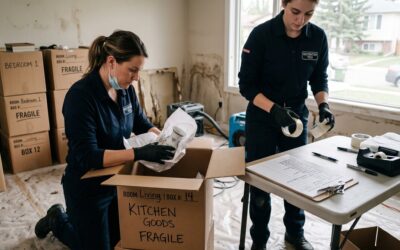
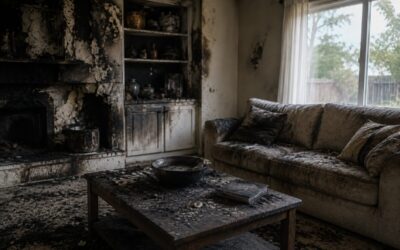
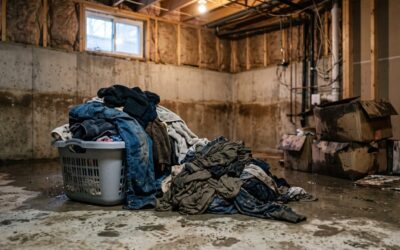
When your home or business experiences fire, flooding, or another major loss, the emotional shock is often followed by a difficult reality: navigating an insurance claim for your damaged belongings.
For many Alberta homeowners, the contents portion of an insurance claim can feel confusing, overwhelming, and time-consuming—especially when you are already dealing with displacement, repairs, and emotional stress.
This guide explains how to file an insurance claim for damaged contents in Alberta, what insurers typically require, how contents restoration fits into the process, and how proper documentation, deodorization, and decontamination help protect both your health and your settlement.
Calgary Contents is Southern Alberta’s trusted contents restoration specialist, restoring valued, sentimental, antique, and irreplaceable items with care, compassion, and detailed documentation to support your insurance recovery.
Table of Contents
- Understanding Contents Coverage in Alberta
- What Qualifies as Damaged Contents?
- What Triggers a Contents Claim (and What Isn’t Covered)
- Step 1: Ensure Safety and Prevent Further Damage
- Step 2: Contact Your Insurance Provider
- Step 3: Document All Damaged Contents
- Step 4: Create a Detailed Contents Inventory
- Step 5: Understand Repair vs Replacement Decisions
- Step 6: Coordinate Contents Restoration Services
- Step 7: Track Expenses and Additional Living Costs
- Step 8: Review Your Settlement Carefully
- Actual Cash Value vs. Replacement Cost
- Salvage vs. Total Loss: Who Decides What’s Restorable
- Cash-Out Settlements vs. Professional Restoration
- Common Mistakes That Delay or Reduce Claims
- How Deodorization and Decontamination Affect Claims
- How Calgary Contents Supports Insurance Claims
- Frequently Asked Questions for Alberta Homeowners
Understanding Contents Coverage in Alberta
Most Alberta homeowner and tenant insurance policies include contents coverage, also known as personal property coverage.
This typically protects items such as:
- Furniture and furnishings
- Clothing and footwear
- Electronics and appliances
- Artwork and décor
- Tools and equipment
- Household goods
Coverage applies when damage is caused by insured events such as:
- Fire and smoke
- Burst pipes or water damage
- Sewer backup (with endorsement)
- Storm or weather-related incidents
Your policy will outline:
- Coverage limits
- Deductibles
- Replacement cost vs actual cash value
- Special limits for valuables
Understanding these basics early helps set realistic expectations.
What Qualifies as Damaged Contents?
Contents do not need to be burned or destroyed to qualify for a claim.
Damaged contents may include:
- Items with smoke or soot contamination
- Clothing with persistent odour
- Water-saturated furniture or textiles
- Items at risk of mould growth
- Electronics exposed to moisture or smoke
- Belongings requiring decontamination
If an item cannot be safely cleaned or deodorized, it may be deemed non-restorable—even if it looks intact.
What Triggers a Contents Claim (and What Isn’t Covered)
Most standard Alberta home policies cover contents damaged by “sudden and accidental” perils. That’s the language to remember — sudden and accidental. A grease fire that spreads from the stovetop, a burst supply line under the kitchen sink, a windstorm that tears off a section of roof and lets in the rain, a break-in, a lightning strike that fries your electronics: all typically covered.
Where things get complicated in Calgary is with events that aren’t quite “sudden” — or where the water came from somewhere the base policy doesn’t want to touch. Here’s the breakdown:
| Cause of Damage | Standard Alberta Home Policy | Requires Add-On / Endorsement |
|---|---|---|
| House fire (accidental) | ✅ Covered | — |
| Kitchen or appliance fire | ✅ Covered | — |
| Burst supply line (frozen pipe) | ✅ Covered | — |
| Roof or window damage → rain infiltration | ✅ Covered | — |
| Wildfire smoke damage | Usually covered, policy-dependent | Some insurers require review |
| Overland flood (river, snowmelt, surface runoff) | ❌ Not covered | Overland Water endorsement |
| Sewer backup into basement | ❌ Not covered | Sewer Backup endorsement |
| Ground seepage / groundwater | ❌ Not covered | Overland Water endorsement |
| Gradual leak (unnoticed for weeks) | ❌ Not covered | Not typically insurable |
| Mould from a covered water event | Limited (often $10K–$25K cap) | Increase mould limit rider |
| Vandalism / theft | ✅ Covered | — |
The 2013 Alberta floods reshaped this landscape. Before 2015, overland flood coverage wasn’t even sold in Canada. Today, most Alberta insurers offer both Overland Water and Sewer Backup endorsements — but you have to have added them before the loss. If a Bow River overflow flooded your Bowness basement or spring melt overwhelmed your storm drain in Ranchlands, and you don’t have the endorsements, your contents inside that water are not covered. Period.
Step 1: Ensure Safety and Prevent Further Damage
Before focusing on documentation or cleanup:
- Confirm the property is safe to enter
- Follow fire department or municipal guidance
- Shut off water or power if advised
You also have a duty to mitigate under Alberta insurance policies, meaning you must take reasonable steps to prevent further damage—without risking your safety.
Examples include:
- Moving items away from active leaks
- Placing items in dry areas
- Arranging emergency pack-out when recommended
Step 2: Contact Your Insurance Provider
Report your loss as soon as possible.
When opening a claim, be prepared to provide:
- Policy number
- Date and cause of loss
- Type of damage (fire, flood, etc.)
- Whether the home is currently livable
Your insurer will assign a claim number and adjuster. Keep this information documented.
Step 3: Document All Damaged Contents
Documentation is one of the most important parts of your claim.
Take clear photos and video
- Capture wide-angle room views
- Photograph damaged items individually
- Include soot, water lines, or residue
- Record serial numbers where possible
Do this before discarding or cleaning items, unless there is a safety risk.
Step 4: Create a Detailed Contents Inventory

Your insurer will require an itemized inventory.
Include:
- Item description (brand, model, material)
- Approximate purchase date
- Estimated replacement cost
- Room location
- Condition before the loss
Professional contents restoration providers often create insurer-ready inventories during pack-out, saving time and reducing disputes.
Step 5: Understand Repair vs Replacement Decisions
Insurers generally determine whether an item should be:
- Restored (cleaned, deodorized, repaired), or
- Replaced (cash settlement or replacement item)
Factors include:
- Cost to restore vs replace
- Health and safety concerns
- Level of contamination
- Policy terms
Contents restoration is often more cost-effective—and preserves sentimental items whenever possible.
Step 6: Coordinate Contents Restoration Services
Once approved, contents restoration may involve:
- Professional pack-out
- Off-site cleaning and deodorization
- Decontamination of affected items
- Secure storage
- Pack-back after repairs
Early coordination helps prevent secondary damage such as mould or odour rebound.
Step 7: Track Expenses and Additional Living Costs
If your policy includes Additional Living Expenses (ALE), keep receipts for:
- Temporary housing
- Meals
- Laundry
- Transportation
- Essential replacements
These costs are often reimbursable during the claim period.
Step 8: Review Your Settlement Carefully
Before finalizing:
- Review inventory totals
- Confirm depreciation calculations
- Verify replacement cost eligibility
- Ask questions if amounts seem unclear
Do not hesitate to request clarification—this is a normal part of the process.
Actual Cash Value vs. Replacement Cost
Two ways your Calgary contents insurance claim can be valued, and they produce wildly different cheques.
Actual Cash Value (ACV) pays the depreciated value of the item — what it’s worth today, given its age and condition. A five-year-old sofa that cost $2,000 new might be valued at $700 ACV. That’s the cheque you get up front.
Replacement Cost Value (RCV) pays what it costs to buy a comparable new item today. That same sofa might be $2,400 RCV in 2026 dollars. The insurer holds back the difference (the “recoverable depreciation”) until you buy the replacement and submit receipts — then they release the balance.
Most standard Alberta home policies include Replacement Cost coverage on contents by default, but confirm this by reading your policy declarations. If yours says “Actual Cash Value” on contents, that’s what you get — no top-up. Upgrading to RCV coverage on renewal is usually inexpensive relative to how much it changes a claim payout.
To collect the recoverable depreciation on an RCV policy, you generally have 180 to 365 days after the loss to buy the replacements and submit receipts. Miss that window and the difference stays with the insurer. For a contents-heavy fire loss, that difference easily runs $20,000 to $60,000 for a typical Calgary family home.
Salvage vs. Total Loss: Who Decides What’s Restorable
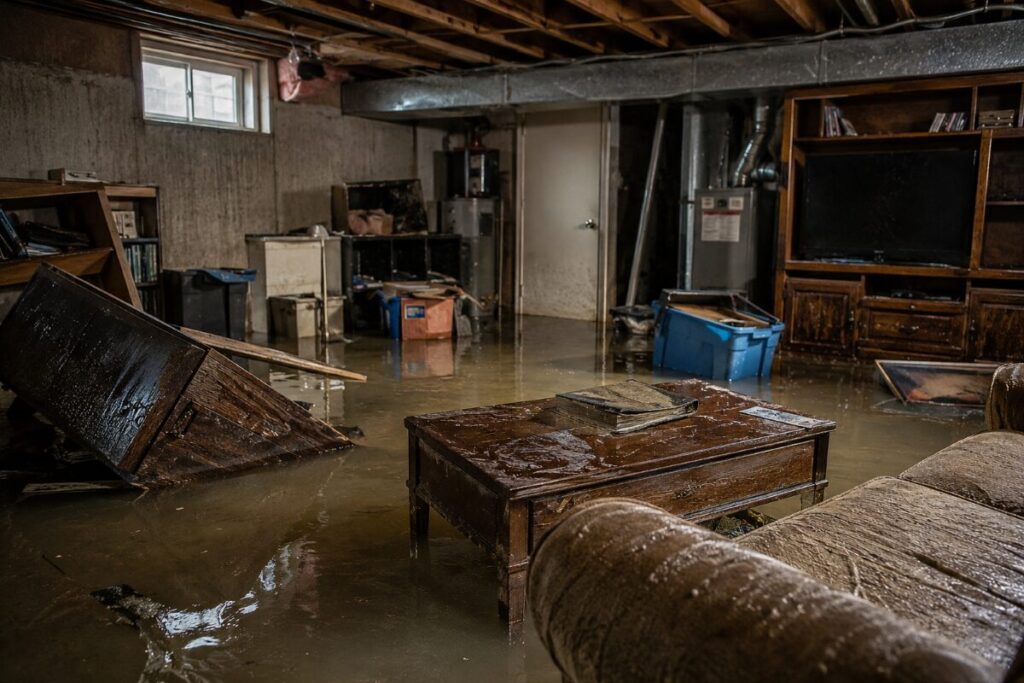
Here’s where a contents specialist earns their fee. Adjusters aren’t restoration technicians — they’re financial risk managers. Faced with a smoke-covered upright piano, a soot-damaged home theatre system, or a chest of family photos that got wet in a basement flood, an adjuster’s instinct is often to write it off, cut a cheque, and move on. Simpler, faster, closes the file.
The problem is that “simpler” isn’t always “better for you.” Family heirlooms don’t have a replacement cost. Vintage electronics can’t be re-bought at Best Buy. And even for ordinary items, restoration usually costs the insurer 30% to 60% less than replacement — which is why a well-organized contents team can save your keepsakes and save the insurer money.
Under Alberta insurance practice, the insurer has the right to determine salvage. But in reality, they lean heavily on the recommendation of the contents contractor who physically handled the items. A specialist who says “we can save this with ultrasonic cleaning and ozone deodorization” carries more weight than an adjuster’s guess from a walk-through photo. This is a good reason to bring in a contents restoration team the same day as the loss — before disposal decisions harden.
Cash-Out Settlements vs. Professional Restoration
Some Calgary homeowners are offered a cash-out settlement for their contents — the insurer writes a lump-sum cheque based on the estimated value of your damaged belongings, and you handle the cleanup, disposal, and replacement yourself. Sometimes this is the right call. More often it isn’t.
Here’s when to consider each:
| Situation | Cash-Out Makes Sense | Professional Restoration Makes Sense |
|---|---|---|
| Small loss ($<3,000) | ✅ Often | — |
| Mostly newer, easily replaceable items | ✅ Yes | — |
| Contains family heirlooms or antiques | — | ✅ Almost always |
| Photos, documents, artwork involved | — | ✅ Yes |
| Electronics with sentimental data | — | ✅ Yes |
| Custom or high-end furniture | — | ✅ Yes |
| Smoke or mould in porous soft goods | — | ✅ Yes (health / warranty) |
| You already plan to redecorate | ✅ Consider | — |
| You don’t have the time or bandwidth to manage disposal | — | ✅ Yes |
The other under-discussed factor: liability. A cash-out settlement transfers responsibility for disposal to you. In Calgary, damaged mattresses, upholstered furniture with mould contamination, appliances with refrigerants, and electronics all have specific disposal rules and fees at the East and Spyhill Landfills. A professional pack-out handles all of it under the claim.
Common Mistakes That Delay or Reduce Claims
- Throwing away items before documentation
- Cleaning soot or water damage improperly
- Failing to photograph contents thoroughly
- Missing inventory details
- Waiting too long to begin restoration
- Not tracking temporary living expenses
Avoiding these mistakes can significantly improve claim outcomes.
How Deodorization and Decontamination Affect Claims
Insurance claims are not based only on appearance.
Items may qualify for replacement when:
- Odour cannot be fully removed
- Decontamination is not possible
- Health risks remain after cleaning
Professional documentation explaining why deodorization or decontamination was unsuccessful can support proper settlement decisions.
How Calgary Contents Supports Insurance Claims

Calgary Contents works alongside insurers and adjusters to provide:
- Detailed contents inventory and photos
- Professional assessment of restorable vs non-restorable items
- Certified cleaning, deodorization, and decontamination
- Secure storage and organized pack-back
- Clear documentation supporting claim decisions
Our role is to reduce stress, preserve what matters, and help claims move forward efficiently.
Frequently Asked Questions for Alberta Homeowners
Do I need multiple quotes?
Often no—many insurers approve restoration vendors directly, but always confirm with your adjuster.
Can I choose my own contents restoration company?
In most cases, yes. You are not required to use a provider suggested by your insurer.
Will smoke odour or mould automatically mean replacement?
Not always. Many items can be restored through professional deodorization and decontamination.
How long does the contents claim process take?
Timelines vary, but early documentation and pack-out significantly speed the process.
Do I need a public adjuster for a Calgary contents claim?
Most Calgary homeowners don’t. Alberta licenses public adjusters (who represent you for a percentage of the settlement) and their value is real on very large or contested claims. For a typical fire or flood claim under $250,000, a good contents restoration contractor with strong documentation practices usually gets you the same outcome without the percentage fee. Consider a public adjuster if your claim is being denied, delayed unreasonably, or if the insurer’s estimate is dramatically lower than yours.
Will filing a contents claim increase my Calgary home insurance premium?
Sometimes, yes — and how much depends on the claim size, the cause, and your insurer’s policy. Weather-related and fire claims typically have less impact on renewals than water damage claims, which insurers treat as higher predictors of future losses. That said, contents coverage exists specifically for events like this. Not claiming a legitimate loss to protect your premium usually costs more in out-of-pocket replacement than the premium increase would over five years.
What if I don’t have receipts for my damaged items?
You don’t need a receipt for every item — Alberta insurers know most people don’t keep them. What helps: pre-loss photos of the home (interior shots taken for real estate listings, insurance walk-throughs, or just family photos where items are visible), credit card or bank statements, manufacturer warranty registrations, email confirmations from online purchases, and any inventory apps you may have used. Your contents restoration team can also provide expert valuations based on brand and condition when documentation is thin.
What happens to items I want to keep even if they’re written off?
You can typically keep any “non-restorable” item after the insurer has documented it and settled the claim on it — you just don’t get to double-dip (keep it and get paid for it). If Grandma’s water-damaged writing desk gets written off, you’re paid its value and you can still keep it, restore it privately, or hand it down. Have this conversation before disposal.