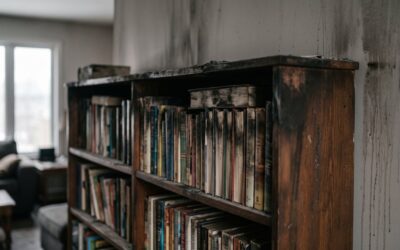
Ozone works fastest on heavy odour but needs the space empty. Hydroxyl is slower and gentler and can run while people are home. Fogging delivers a deodorizing or disinfecting mist into every corner the smoke reached. On most professional jobs, the answer is not one method: soot and residue are cleaned first, then one or more of these treatments removes what is left.
This guide explains how each method works, where it fits, what to watch out for, and which one we reach for after a house fire, wildfire smoke, a kitchen fire or a sewer backup.
Key Takeaways
- Odour treatment only works after the source, such as soot, is cleaned away.
- Ozone is fast and strong but requires an empty, aired-out space.
- Hydroxyl is slower, gentler on materials and safe in occupied spaces.
- Fogging reaches every surface, and disinfection fogging also sanitizes.
- Most smoke jobs combine cleaning with more than one treatment.
Table of Contents
- Why cleaning comes first
- How ozone treatment works
- How hydroxyl treatment works
- How fogging works
- Ozone vs. hydroxyl vs. fogging compared
- How long each treatment takes
- Safety considerations
- Which method for which odour?
- Odour after a water loss
- Treating odour while you live at home
- How professionals confirm the odour is gone
- How odour behaves in different materials
- Why smoke smell comes back on warm days
- What you can do yourself, and the limits
- Questions to ask an odour removal company
- Frequently Asked Questions
Why cleaning comes first
Odour comes from residue. After a fire, smoke leaves soot on hard surfaces and particles deep inside fabric, paper and wood. After a water loss, odour comes from bacteria and contaminants. A treatment that does not remove the residue only hides it, and the smell returns when the weather warms up or the furnace runs.
That is why contents are cleaned first, by ultrasonic cleaning, laundering, dry cleaning or hand cleaning, and only then deodorized.
How ozone treatment works
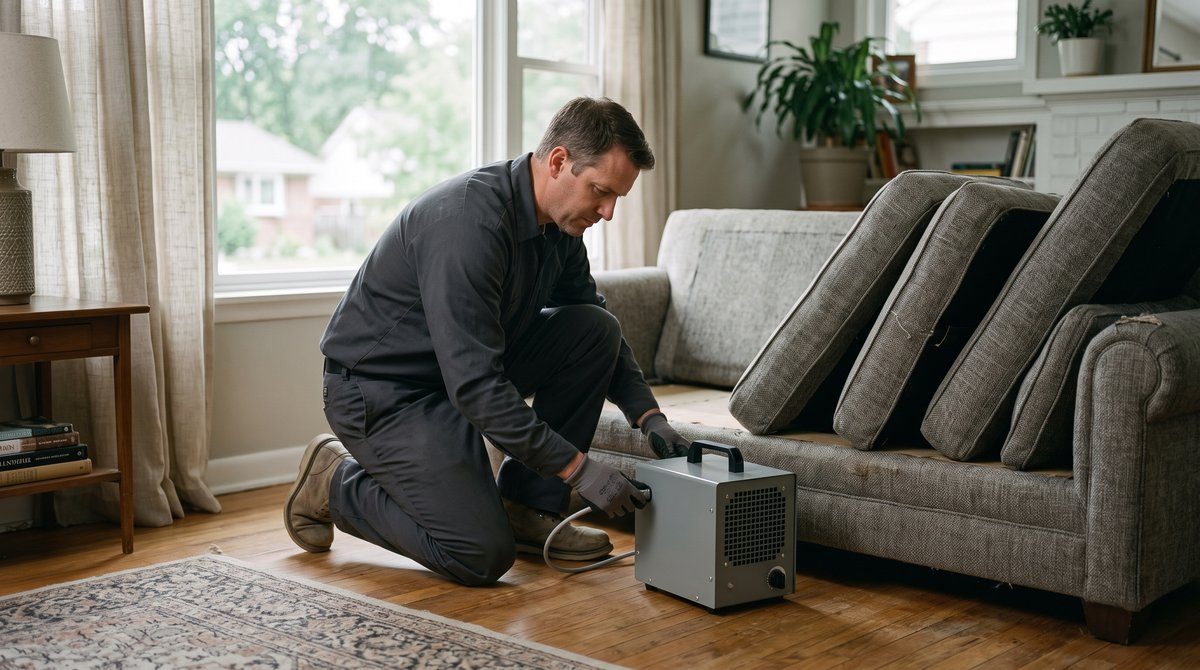
Ozone is a reactive form of oxygen. In a sealed space it breaks down odour molecules quickly, which makes it effective for heavy smoke odour. The trade-off is safety: ozone irritates the lungs, so nobody can be in the space during treatment, and the area has to be ventilated afterwards. Long or repeated exposure can also degrade rubber, some plastics and certain fabrics, so it is used with care on contents.
How hydroxyl treatment works
Hydroxyl generators produce hydroxyl radicals, the same compounds that clean outdoor air, and use them to break down odour molecules. They work more slowly than ozone but are gentle on materials and safe to run while people, pets and plants are present. That makes hydroxyl useful for homes that stay occupied and for treating delicate contents over several days.
How fogging works
Fogging turns a deodorizing or disinfecting solution into a fine mist that follows the same paths smoke did, into cracks, vents and soft materials. Thermal fogging uses heat to create the fog for smoke odour. Dry fogging systems disperse hydrogen peroxide, and the TOMI SteraMist™ system uses ionized hydrogen peroxide to disinfect as well as deodorize.
Calgary Contents uses the Halo and TOMI SteraMist™ systems, and we are the only Alberta-certified TOMI SteraMist™ applicator. See our fogging services.
Ozone vs. hydroxyl vs. fogging compared
| Ozone | Hydroxyl | Fogging | |
|---|---|---|---|
| How it works | Reactive oxygen breaks down odour molecules | Hydroxyl radicals break down odour molecules | Fine mist reaches every surface |
| Can people stay? | No, space must be empty | Yes | No, during treatment |
| Speed | Fast | Slower, often days | Fast per application |
| Best for | Heavy smoke odour in empty spaces | Occupied homes and delicate contents | Hard-to-reach odour and disinfection |
| Watch-outs | Airing out; some materials degrade | Takes longer | Needs cleaning first |
How long each treatment takes
Treatment time depends on how strong the odour is, how large the space is and what materials are involved, so these are typical patterns rather than promises:
| Method | Typical treatment pattern | Re-entry |
|---|---|---|
| Ozone | Hours to a day per treatment, sometimes repeated | After ventilation, once confirmed safe |
| Hydroxyl | Runs continuously for several days | Space can stay occupied |
| Fogging | Applied in a single visit, sometimes repeated | After the fog settles and the space is ventilated |
Safety considerations
- Never stay in a space during an ozone treatment, and keep pets and plants out
- Ventilate after ozone and fogging, and only re-enter when the technician confirms it is safe
- Tell your technician about anyone with asthma, allergies or chemical sensitivities
- Avoid mixing your own cleaning chemicals with a professional treatment
- Hydroxyl is the usual choice when a home has to stay occupied
Which method for which odour?
- House fire smoke: clean the soot, then hydroxyl or ozone, often followed by fogging. See smoke odour and soot removal.
- Wildfire smoke: textiles and soft goods need treatment before laundering. See wildfire smoke damage.
- Kitchen fire or burnt food: degreasing and cleaning, then hydroxyl.
- Cigarette smoke: cleaning of every surface, then ozone in an empty home or hydroxyl in an occupied one.
- Sewer backup or flood odour: decontamination and drying first, then deodorizing. See deodorization and decontamination.
Odour after a water loss
Water damage brings a different kind of smell from smoke. A musty odour usually means moisture is still present or microbial growth has started, and a sour or sewage smell means contamination. Neither goes away with a deodorizing treatment alone. The source has to be dried, cleaned or removed first, and contaminated belongings need decontamination before any odour treatment.
For contents, that means drying and cleaning each item, then deodorizing in a controlled space. See deodorization and decontamination and water and flood damaged belongings.
Treating odour while you live at home
Not every family can move out during odour treatment. In an occupied home, the usual approach is to clean affected surfaces and belongings, run hydroxyl units in the treated areas, and move the most affected contents to a facility for deeper treatment. Ozone and fogging can then be scheduled for a time when the home can be empty for a short period, such as a weekend away.
How professionals confirm the odour is gone
A deodorizing job is only finished when the odour stays gone. Technicians check items and rooms after treatment and again after they have been closed up for a while, because trapped odour is easier to notice in a closed space. Items that still smell go back for more cleaning or another treatment rather than being returned to the home.
How odour behaves in different materials
The same smoke smells different, and leaves differently, depending on what it settled into:
- Fabrics and upholstery trap smoke particles deep in the fibres and need cleaning plus deodorizing. See textile restoration.
- Paper and books absorb odour and are among the hardest items to deodorize. See how to get smoke smell out of books.
- Unfinished wood soaks up odour; sealed and finished wood holds it on the surface.
- Hard surfaces such as glass, metal and ceramics clean well, and odour leaves with the residue.
- Ductwork can spread odour through the whole house, so it needs attention before the furnace runs normally.
Why smoke smell comes back on warm days
Calgary homeowners often notice a smoke smell returning months after a fire, on a warm chinook day or when the furnace first runs in the fall. Heat and humidity release odour molecules that were trapped in materials but not fully removed. It is a sign that residue is still there, not that the treatment wore off, and it is why professionals clean thoroughly before deodorizing.
What you can do yourself, and the limits
Ventilation, washing what can be washed and activated charcoal can help with a light odour. Scented sprays and candles only cover the smell. Renting an ozone generator is risky: running one in an occupied home is a health hazard, and it will not fix odour coming from soot that is still there.
Questions to ask an odour removal company
- How will you find and remove the source of the odour?
- Which method will you use, and why that one for my home?
- Do we need to leave, and for how long?
- How will you treat my belongings, not just the house?
- What happens if the smell comes back?
- Are your technicians trained in odour control?
Our team holds IICRC certifications including Odor Control Technician. See odour removal and sanitization for how we approach it.
Frequently Asked Questions
Is ozone safe for pets and plants?
No. People, pets and plants all need to be out of the space during an ozone treatment and until it has been aired out. Hydroxyl is the option when a space has to stay occupied.
When can I go back in after an ozone treatment?
Only after the technician has stopped the treatment, ventilated the space and confirmed it is safe. Do not re-enter on a timer you set yourself.
Can hydroxyl remove smoke smell from clothes?
Yes, as part of cleaning. Textiles are cleaned first, then hydroxyl or ozone treatment deals with odour left in the fibres. See textile restoration.
Does fogging disinfect as well as deodorize?
Disinfection fogging systems such as Halo and TOMI SteraMist™ are designed to disinfect surfaces as well as reach odour in places cleaning misses.
Will the smell come back after treatment?
Not if the source is removed. Odour returns when soot or residue is left behind, which is why cleaning always comes before deodorizing.
Can odour treatment damage my belongings?
Used correctly, no. Ozone can degrade some rubber, plastics and fabrics with long or repeated exposure, which is why professionals control the dose and often choose hydroxyl for delicate contents.
How do I know which treatment my home needs?
It depends on the source, the materials and whether the home is occupied. A technician will assess the odour and explain the plan before starting.
Does fogging work on cigarette smoke?
Fogging helps, but cigarette smoke leaves a sticky residue that has to be cleaned from every surface first. See smoke odour removal.
Still smelling smoke after cleaning? We will find the source and use the right treatment for your home and belongings. Call (403) 407-0208 or contact us online.