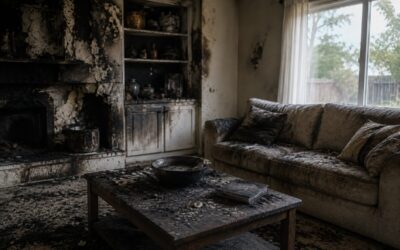
The cost of contents restoration in Calgary depends mostly on how much needs to be moved, what it is made of, what damaged it and how long your repairs will take. A single room of hard goods after a small fire is a very different job from a full house of furniture, electronics and clothing after a flood. That is why reputable contents companies assess the property first and give you a scope, rather than quoting a flat rate over the phone.
When the loss is covered by insurance, most of this cost is handled through your claim, apart from the deductible. This guide breaks down what drives the price of each part of a contents job, so you know what to expect and what to ask.
Key Takeaways
- Cost depends on the number of items, the materials, the type of damage and the repair timeline.
- Restoring an item is usually cheaper than replacing it, which is why insurers generally prefer it.
- Pack-out, cleaning, odour removal, storage and pack-back are priced separately.
- On a covered claim, your share is normally limited to your deductible.
- Ask for a written scope before work starts.
Table of Contents
- What drives the cost
- Cost factors by service
- How the type of loss changes the cost
- What’s included in a contents quote
- How a scope comes together
- Why the lowest quote can cost more
- How the repair timeline affects cost
- Commercial and multi-unit jobs
- What you might pay out of pocket
- Restoring vs. replacing
- When replacing is the better value
- How insurance handles the cost
- The hidden costs of doing it yourself
- How to keep costs down
- Questions to ask before you sign
- Getting a quote from Calgary Contents
- Frequently Asked Questions
What drives the cost
- Volume: how many rooms and items need to be packed, cleaned and stored
- Materials: hard goods, electronics, textiles, documents and art each need different methods
- Type of damage: smoke, clean water, sewer water and mould each change the work involved
- Odour: heavy smoke odour adds deodorizing time
- Timeline: the longer the repairs, the longer items stay in storage
- Access: stairs, distance and building access affect pack-out time
Cost factors by service
| Service | What affects the price |
|---|---|
| Pack-out and pack-back | Number of rooms and items, packing materials, crew time, truck trips |
| Photo inventory | Number of items to document |
| Ultrasonic cleaning | Volume and size of hard items, severity of soot |
| Electronics restoration | Number and type of devices, contamination level |
| Textile cleaning | Volume of clothing and linens, delicate or specialty items |
| Odour removal | Strength of odour, method used, treatment time |
| Storage | Volume stored and length of repairs |
Ultrasonic cleaning has its own guide: what ultrasonic cleaning costs in Calgary.
How the type of loss changes the cost
| Type of loss | What adds to the work |
|---|---|
| Smoke and soot | Soot cleaning on almost every item, plus odour treatment |
| Clean water | Drying and preventing mould; usually fewer items need deep cleaning |
| Sewer backup | Decontamination of every restorable item; more items are non-restorable |
| Mould | Cleaning and treatment of affected items; porous items are often written off |
| Wildfire smoke | Odour treatment of soft goods throughout the home |
Our guide to sewer backup belongings explains why contaminated water changes the outcome so much.
What’s included in a contents quote
A contents quote should spell out each stage of the work, so you and your adjuster can see what you are paying for. Expect to see:
- Pack-out labour, packing materials and transport
- Photo inventory and documentation
- Cleaning and restoration, broken down by category of items
- Odour removal treatments, if needed
- Storage, usually by volume and length of time
- Pack-back, unpacking and placement
- Any items you have asked to be prioritized
How a scope comes together
Here is how a contents scope is typically built for a kitchen fire that sent smoke through the main floor of a house:
- Walkthrough with the homeowner and adjuster to agree on which rooms are affected
- Room-by-room list of contents, with special handling noted for electronics, art and keepsakes
- Pack-out plan: crew size, packing materials and truck trips
- Cleaning plan by category: ultrasonic for hard goods, laundering and dry cleaning for textiles, electronics restoration for devices
- Odour treatment plan for soft goods and furniture
- Storage estimate based on how long the repairs are expected to take
- Pack-back and placement
Each line can be reviewed and approved by your adjuster, which is why a written scope keeps the claim moving.
Why the lowest quote can cost more
A low quote for contents work can leave out the steps that make restoration last: thorough soot removal before deodorizing, proper drying before storage, or detailed documentation. When those steps are skipped, odour returns, mould grows in storage or items go missing from the claim, and the cost comes back later as re-cleaning or replacement. Ask what each quote includes, not just what it costs.
How the repair timeline affects cost
Storage is the part of a contents bill that grows with time. A small water loss might be repaired in a few weeks, while a major fire rebuild can take many months. Cleaning costs are mostly fixed once the scope is set, but storage runs until the home is ready. Ask your contractor for a realistic repair timeline early, so the storage estimate in your contents scope is realistic too.
Commercial and multi-unit jobs
Business and multi-unit losses add their own cost factors: after-hours work to keep a business open, larger volumes of furniture and equipment, sensitive records, and coordination with several tenants or departments. Prioritizing what a business needs to reopen can reduce business interruption costs even when the contents scope is larger. See commercial contents restoration.
What you might pay out of pocket
- Your deductible, which applies once per claim on most policies
- Work on a loss that is not covered, such as a sewer backup without the endorsement
- Storage beyond what the policy allows, if repairs run long and your policy sets a limit
- Restoring items the adjuster would rather replace, such as a sentimental piece that costs more to restore than it is worth
- Extras you ask for, such as moving belongings to a different home after pack-back
Ask your adjuster and your contents company about each of these at the start, so nothing comes as a surprise.
Restoring vs. replacing
For most belongings, restoring costs less than replacing, and it keeps the things you cannot buy again: heirlooms, photographs, artwork and items with memories attached. Insurers generally prefer restoration when it works for the same reason. Where an item cannot be restored safely or economically, it is documented as non-restorable and claimed for replacement instead.
See contents restoration vs. replacement for how that decision is made.
When replacing is the better value
- Inexpensive items that cost less to replace than to clean
- Porous items soaked by sewer or flood water
- Items with heat damage, melting or structural damage
- Mattresses and pillows exposed to contamination
- Food, medication and cosmetics exposed to smoke or water
Those items are documented as non-restorable rather than restored. See non-restorable items explained.
How insurance handles the cost
On a covered claim, the contents work is part of your claim and your adjuster reviews the scope. Your share is usually the deductible. If the cause of the loss is not covered, for example a sewer backup without the endorsement, you would pay for the work directly, which makes an upfront scope even more important.

The hidden costs of doing it yourself
Cleaning up yourself can look cheaper, but it often costs more in the end. Wiping soot sets it into surfaces. Powering up wet electronics can short them. Washing smoky clothes with heat can lock in the smell. Throwing out damaged items before they are documented can leave them off your claim entirely. And your time matters when you are also dealing with a damaged home.
How to keep costs down
- Call early: soot and water do more damage every day they sit
- Do not wipe soot or run electronics, which can turn a restorable item into a write-off
- Keep essentials and valuables with you so they do not need to be stored
- Tell us what matters most so it gets priority
- Keep your own list or photos of your belongings to speed up the inventory
Questions to ask before you sign
- Is the scope approved by my adjuster?
- What is included, and what would be extra?
- How is storage charged, and for how long?
- Will I get a copy of the photo inventory?
- Who decides what is non-restorable, and how is that documented?
- Who do I call with questions during the job?
Getting a quote from Calgary Contents
We assess what was damaged, explain what can be saved and what the contents side will involve, and work with your adjuster on approval. Our process page shows what happens after that.
Frequently Asked Questions
Is contents restoration cheaper than replacing everything?
Usually, for items that can be restored. Hard goods, electronics and many textiles cost less to clean than to replace, especially when the replacement would be new.
Do I pay for contents restoration myself?
Not when the loss is covered by your insurance. Contents work is usually part of the claim, apart from your deductible. See what home insurance covers in Alberta.
How is the cost of a pack-out estimated?
Mainly by how many rooms and items there are, how fragile or specialized they are, and how long the pack-out takes. We assess the property and give a scope before the work starts.
Does storage add a lot to the cost?
Storage is usually a smaller share of the total, and it is charged for as long as the repairs take. Longer repairs mean longer storage.
Can I get a quote before I file a claim?
Yes. Call us and we can talk through what was damaged and what the contents side of the job is likely to involve.
Do you charge for an assessment?
Call us to talk through what happened. We will explain how the assessment works for your situation and what the next steps are.
Is storage charged by the month?
Storage is usually charged by volume and time, so it runs as long as the repairs do. Your scope will show how it is calculated.
What if my adjuster does not approve part of the scope?
We review it with you and the adjuster, explain why each step is needed, and adjust the plan where it makes sense.
Want to know what your contents job will involve? Call (403) 407-0208 or contact us online for an assessment.