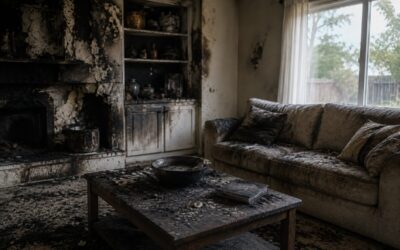
After a sewer backup, hard, non-porous belongings such as dishes, metal, glass, hard plastics and many sealed electronics can usually be cleaned and disinfected. Porous items that soaked up the water, such as mattresses, upholstered furniture, carpet, cardboard and stuffed toys, usually cannot be made safe and are documented for replacement. Photographs and important documents sit in between and can sometimes be saved with decontamination and freeze-drying.
Calgary’s heavy spring and summer storms can overwhelm the sewer system, and a backup through a floor drain turns a finished basement into a contaminated space within minutes. This guide explains why sewer water is different, what to do in the first 48 hours, what can be saved and how insurance usually treats it.
Key Takeaways
- Sewer water is Category 3, the most contaminated class of water.
- Hard, non-porous items can usually be cleaned and disinfected.
- Porous items soaked with sewage are usually not worth saving.
- Photograph everything before it is moved or thrown out.
- Sewer backup coverage usually requires a specific endorsement.
Table of Contents
- Why sewer water is different
- Sewer backup vs. overland flood vs. clean water
- Calgary storm season and sewer backups
- Category 3 water and your health
- Safety first
- The first 48 hours
- What can usually be saved
- Basement contents: room by room
- Drying and preventing mould
- Documenting a sewer backup for your claim
- What to keep for your adjuster
- Sewer backup and your insurance
- How professionals decontaminate contents
- Reducing the risk of another backup
- After the clean-up: getting back to normal
- Frequently Asked Questions
Why sewer water is different
Restoration professionals classify water by contamination under the IICRC S500 standard. Clean water from a supply line is Category 1. Sewer backups are Category 3: grossly contaminated water that can carry bacteria, viruses and other harmful material. Anything it soaks into has to be treated as contaminated, which is what changes the restore-or-replace decision.
Sewer backup vs. overland flood vs. clean water
| Source | Contamination | Typical outlook for belongings | Insurance in Alberta |
|---|---|---|---|
| Burst supply pipe or appliance line | Clean water (Category 1) if dealt with quickly | Most items can be dried and saved | Usually covered when sudden |
| Washer or dishwasher overflow | Grey water (Category 2) | Many items can be cleaned and saved | Usually covered when sudden |
| Sewer backup through a floor drain | Black water (Category 3) | Hard goods saved; porous items often lost | Needs a sewer backup endorsement |
| Overland flood from rain or rivers | Usually treated as Category 3 | Similar to sewer backup | Needs overland flood coverage |
Clean water that sits for days can become contaminated too, which is another reason to move quickly.
Calgary storm season and sewer backups
Most Calgary sewer backups happen during intense summer thunderstorms and spring melt, when heavy rain arrives faster than the storm and sanitary systems can carry it away. Homes in older neighbourhoods and those without backwater valves are most exposed. Hail storms can add roof and window leaks on top of that. See water and flood damaged belongings.
Category 3 water and your health
Sewage carries bacteria and other pathogens that can cause illness through skin contact, cuts or contact with your mouth and eyes. Young children, older adults, pregnant people and anyone with a weakened immune system should stay away from the affected area until it has been cleaned and disinfected. Pets should be kept out too.
Safety first
- Keep children and pets away from the affected area
- Do not walk through standing water near outlets or appliances; have the power checked if water reached them
- Wear rubber boots, gloves and eye protection, and a mask if you must go in
- Ventilate if it is safe to do so
- Wash hands and clothing after any contact
The first 48 hours
- Stop the water if you can, and call a plumber about the cause
- Call your insurer or broker to report the loss
- Photograph the water line, the damage and every affected item
- Move unaffected belongings to a dry, clean area
- Freeze wet photos and documents in sealed bags if possible
- Call a contents restoration company to pack out and assess what can be saved
What can usually be saved
| Item | Usual outlook | How it is restored |
|---|---|---|
| Dishes, glass, metal and ceramics | Usually restorable | Cleaning and disinfection, often ultrasonic |
| Hard plastics and sealed toys | Usually restorable | Cleaning and disinfection |
| Electronics | Sometimes | Professional decontamination and drying |
| Wood furniture | Sometimes | Cleaning, disinfection and drying; depends on soak time |
| Photographs and documents | Sometimes | Decontamination and freeze-drying |
| Clothing and washable textiles | Sometimes | Specialized laundering and sanitizing |
| Mattresses, upholstery, carpet and pads | Rarely | Usually documented for replacement |
| Cardboard boxes, paper goods, stuffed toys | Rarely | Usually documented for replacement |
Basement contents: room by room
- Rec room: sofas, rugs and floor cushions usually go; tables, consoles and hard décor can often be cleaned.
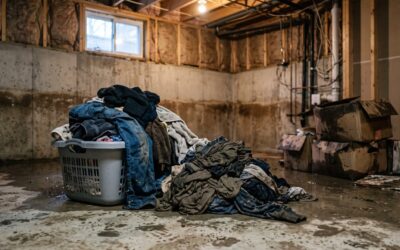
- Laundry room: clothing in hampers on the floor needs sanitizing; washers and dryers need a check before use.
- Storage room: cardboard boxes soak up water fast; plastic bins protect contents only if they were sealed and off the floor.
- Kids’ play area: hard plastic toys can often be disinfected; plush toys and foam mats usually cannot.
- Home office: documents and electronics need professional assessment before anyone powers anything up.
- Freezers and fridges: food touched by sewage or left without power goes; the appliances themselves need cleaning and a check.
Drying and preventing mould
Mould can start growing on wet porous materials within a day or two. Restorable belongings need to come out of the wet basement, be cleaned and disinfected, and be dried properly before storage. The structure needs professional drying at the same time. Belongings left in a wet, closed basement while you wait for help are the ones most likely to be lost.
See how to protect belongings from mould after water damage.
Documenting a sewer backup for your claim
- Photos of the floor drain or fixture where the water came in
- Photos and video showing how high the water reached
- Photos of every affected item before it is moved or thrown out
- A list of items with rough values, using your home inventory if you have one
- Plumber reports on the cause
- Receipts for emergency costs such as clean-up supplies
What to keep for your adjuster
It is tempting to drag everything to the curb, but disposing of items too early can make them harder to claim. Unless an item is a health hazard, keep it until your adjuster has seen it or confirmed photos are enough. If you must throw something out, photograph it first, including labels, model numbers and a wide shot showing where it was. Cut a small sample from carpet and underpad before they go, as adjusters sometimes ask for it.
Sewer backup and your insurance
In Alberta, sewer backup coverage is usually an endorsement you add to your home policy, often with its own limit. Overland flood from rivers or surface water is a separate optional coverage again. If you have the endorsement, contents cleaning, pack-out, storage and replacement of non-restorable items are usually part of the claim. Our guide to what home insurance covers in Alberta explains more.
To reduce the risk of a repeat, ask a plumber whether a backwater valve is right for your home.
How professionals decontaminate contents
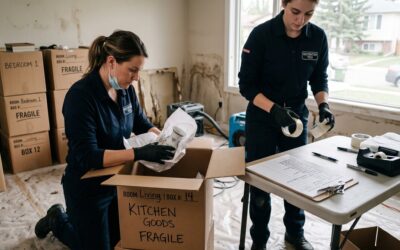
Contents are packed out, photographed and sorted by material and contamination. Restorable items are cleaned, disinfected and dried with methods that suit them, then deodorized and stored until the basement is repaired. Items that cannot be saved are documented with photos and descriptions for your adjuster. See water and flood damaged belongings and how our process works.
Reducing the risk of another backup
- Ask a plumber whether a backwater valve is right for your home
- Keep belongings off basement floors, on shelving or pallets
- Store important papers and keepsakes upstairs or in sealed, raised containers
- Keep floor drains clear and do not pour grease down sinks
- Check that downspouts drain well away from the house
- Review your policy for sewer backup coverage and limits each year
After the clean-up: getting back to normal
Once the basement is repaired, restored belongings come back clean, dry and deodorized. Before they go back downstairs, make sure the structure has been dried and cleared, and keep an eye on humidity for the first few weeks, since basements in Calgary can swing from dry to damp with the seasons. Store keepsakes and documents upstairs or on shelving, and keep a fresh photo inventory of what goes back into the basement.
Frequently Asked Questions
Is sewer backup covered by home insurance in Alberta?
Usually only if you have a sewer backup endorsement on your policy, and it may have its own limit. Check your policy or ask your broker before you need it.
Can a mattress be saved after a sewer backup?
Generally no. Mattresses absorb contaminated water deep into the padding, and cleaning cannot make them safe. Photograph them for your claim before disposal.
Are photos and documents from a sewer backup salvageable?
Sometimes, with decontamination and freeze-drying. Keep them separate, freeze them if you can and get professional advice quickly. See document drying and restoration.
How soon should belongings come out after a sewer backup?
As soon as it is safe. Contaminated water keeps soaking into porous items and bacteria grow quickly, so the first 24 to 48 hours matter most.
Can I clean up a sewer backup myself?
Small, shallow backups on hard floors are sometimes handled by homeowners with full protective equipment, but contaminated porous items and anything more than a small spill should be handled by professionals.
Should I throw out wet items right away?
No. Photograph everything first and keep non-restorable items until your adjuster says they can go, unless they are a health hazard. Then take extra photos before disposal.
Can clothes be saved after a sewer backup?
Often, yes. Washable clothing can usually be sanitized with specialized laundering. Leather, wool and delicate items need professional assessment.
Do I need to leave my home after a sewer backup?
Not always. If the contamination is limited to the basement and it can be closed off, many families stay. Leave if the main floor is affected, the power is off or anyone in the home is vulnerable.
Dealing with a sewer backup? We pack out, decontaminate and document your belongings so you can focus on the basement. Call (403) 407-0208 any time, or contact us online.