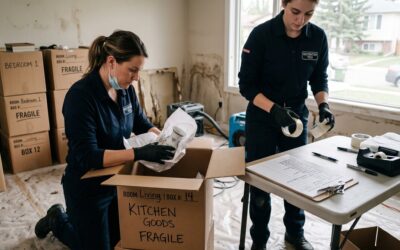
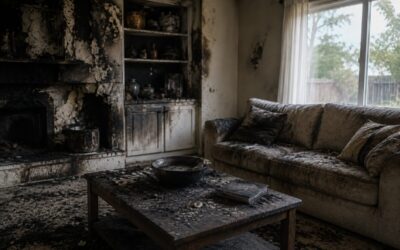
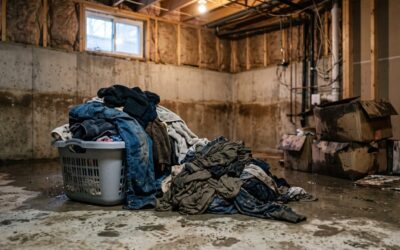
Many belongings can be saved after mould, especially hard, non-porous items and finished wood, which can be cleaned and sanitized. Porous items with mould deep inside, such as mattresses, upholstery foam, carpet and cardboard, usually cannot. Documents and photographs can often be saved by freezing and drying, and many textiles by specialized cleaning. Act within the first 24 to 48 hours, keep mouldy items away from clean ones, and have anything valuable assessed before it is thrown out.
You’ve just discovered mould growing in your Calgary basement after a slow leak went unnoticed all winter. Now you’re staring at furniture with dark spots, boxes of damp clothing, and photo albums that smell musty. The question every homeowner asks in this moment is: can any of this be saved? The answer, more often than you’d expect, is yes — but only if you act quickly and bring in the right professionals for contents cleaning and restoration.
Mould damage to belongings is one of the most common — and most misunderstood — challenges facing Calgary homeowners. Unlike fire or flood damage, which tends to be sudden and obvious, mould often develops quietly over weeks or months. By the time you spot it, your furniture, electronics, documents, and textiles may already be compromised. This guide covers everything you need to know about protecting your belongings from mould after water damage in Calgary, including what can be restored, what can’t, and how professional contents restoration works.
Table of Contents
- How Mould Damages Your Belongings
- Why Calgary Homes Are Particularly Vulnerable
- Which Items Can Be Saved After Mould Damage
- Items That Are Typically Non-Restorable
- The Professional Mould Cleaning Process for Contents
- DIY vs. Professional Mould Restoration: What Actually Works
- Preventing Mould Damage to Your Belongings
- Insurance Coverage for Mould-Damaged Contents in Alberta
- Frequently Asked Questions
- Get Professional Help for Mould-Damaged Belongings
How Mould Damages Your Belongings
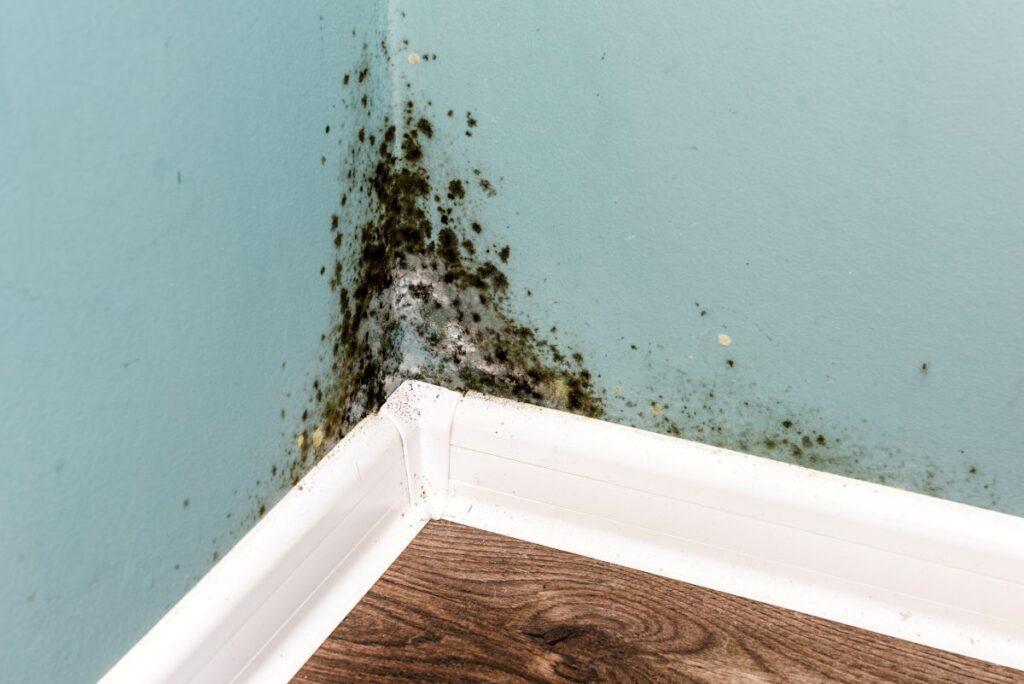
Mould is a living organism that feeds on organic materials — and your home is full of them. Wood furniture, leather goods, cotton clothing, paper documents, and even the dust sitting on electronics all provide nutrients for mould colonies. When moisture levels rise above 60% relative humidity, mould spores that are naturally present in the air can settle on surfaces and begin growing in as little as 24 to 48 hours.
The damage mould causes to personal belongings goes well beyond surface staining. Mould produces enzymes that break down the materials it feeds on, weakening wood fibres, degrading fabric integrity, and causing permanent discolouration. It also produces mycotoxins and volatile organic compounds (VOCs) that create the unmistakable musty odour associated with mould-affected items. Left untreated, mould doesn’t just stain your belongings — it structurally weakens and eventually destroys them.
Perhaps most concerning, mould on belongings poses real health risks. Handling mould-contaminated items without proper protection can trigger allergic reactions, respiratory irritation, and in some cases more serious health complications — particularly for children, seniors, and anyone with existing respiratory conditions.
Why Calgary Homes Are Particularly Vulnerable to Mould on Belongings
Calgary’s unique climate creates a perfect storm for mould development. During the long winter months, frozen pipes are a common occurrence — and when they burst, water can saturate walls, floors, and personal belongings before homeowners even realize there’s a problem. The 2013 Calgary floods demonstrated on a massive scale how quickly water damage can lead to widespread mould contamination across thousands of homes.
Spring snowmelt along the Bow and Elbow rivers frequently causes basement flooding in communities throughout the city. Even minor seepage that goes undetected can create the damp, enclosed conditions mould thrives in. Calgary’s rapid temperature swings — particularly the warm chinook winds that can raise temperatures by 20°C or more in a single day — cause condensation on cold surfaces like basement walls and windows, adding another moisture source that many homeowners overlook.
Newer Calgary communities like Mahogany, Seton, and Livingston are built on land that can have high water tables, increasing basement moisture risk. Meanwhile, older neighbourhoods like Bowness, Sunnyside, and Inglewood sit in flood-prone zones near the rivers. Regardless of where you live in Calgary, understanding mould risk to your belongings is essential.
Which Items Can Be Saved After Mould Damage
One of the biggest misconceptions about mould damage is that affected belongings are automatically ruined. In reality, professional contents cleaning and restoration can save a surprising number of items — often for a fraction of what replacement would cost. The key factors that determine restorability are the material type, the extent of mould penetration, and how quickly professional treatment begins.
Items With High Restoration Success Rates
Hard-surface furniture — Wood tables, dressers, and shelving can usually be restored through professional cleaning, sanding, and refinishing. Surface mould on finished wood is relatively straightforward to remove. Even unfinished wood with moderate mould growth can often be saved if the structural integrity hasn’t been compromised.
Electronics and appliances — Mould on circuit boards and internal components is treatable through ultrasonic cleaning and anti-corrosion protocols. Our electronics restoration process can recover computers, televisions, gaming consoles, and kitchen appliances that appear unsalvageable.
Metal items — Tools, cookware, appliances with metal housings, and decorative metalwork are non-porous and respond well to thorough cleaning and sanitization.
Hard-cover books and some documents — While heavily saturated paper is difficult to restore, many documents and books can be recovered through professional freeze-drying and deodorization techniques.
Items With Moderate Restoration Success Rates
Upholstered furniture — Sofas, chairs, and mattresses with surface mould can sometimes be restored through deep cleaning and sanitization and odour removal treatment. However, if mould has penetrated the padding or foam core, restoration becomes much more difficult.
Clothing and textiles — Washable fabrics often recover well with professional cleaning and deodorization. Delicate fabrics, leather, and suede require specialized treatment but can frequently be saved.
Photographs and artwork — Professional restoration can recover many mould-affected photographs and prints, though success depends heavily on the type of paper, ink, and the duration of exposure.
Items That Are Typically Non-Restorable After Mould Damage
While professional restoration can save more than most people expect, some items are genuinely beyond recovery. Understanding this helps you set realistic expectations and focus insurance claims appropriately.
| Item Category | Restorability | Why |
|---|---|---|
| Particle board / MDF furniture | Rarely restorable | Swells and disintegrates when wet; mould penetrates the composite material |
| Mattresses and pillows | Usually non-restorable | Mould penetrates deep into foam and fibrefill where it cannot be fully removed |
| Cardboard boxes and packaging | Non-restorable | Porous material absorbs moisture and mould rapidly |
| Unsealed drywall / insulation | Non-restorable | Must be removed and replaced as part of structural remediation |
| Stuffed toys and soft baby items | Rarely restorable | Health risk outweighs restoration cost, especially for children’s items |
| Cosmetics and personal care products | Non-restorable | Cannot be adequately sanitized for safe personal use |
When items cannot be restored, proper documentation is critical for your insurance claim. Calgary Contents provides detailed photo inventory services that catalogue every item — both restorable and non-restorable — giving you and your insurance adjuster a clear record of the damage.
The Professional Mould Cleaning Process for Contents
Professional contents restoration for mould damage goes far beyond what any DIY approach can achieve. At Calgary Contents, our mould cleaning process for belongings follows a systematic, multi-step approach designed to eliminate mould at the source while preserving the integrity of each item.
Step 1: Assessment and Triage
Every item is individually assessed for mould type, penetration depth, and structural condition. We categorize belongings into three groups: items for restoration, items requiring further evaluation, and items that are non-restorable. This triage step ensures that restoration efforts are focused where they’ll have the greatest impact.
Step 2: Containment and Safe Removal
Mould-affected items need to be carefully removed from the contaminated environment to prevent cross-contamination with clean areas. Our team uses containment protocols, personal protective equipment (PPE), and HEPA filtration to ensure mould spores don’t spread during the contents packout process.
Step 3: Specialized Cleaning and Sanitization
Different materials require different cleaning approaches. Hard surfaces are treated with antimicrobial solutions. Electronics are cleaned without saturating them and dried in our Electronic Drying Chamber. Textiles receive specialized washing and antimicrobial treatment. Wood furniture is cleaned, sanded if necessary, and treated to eliminate embedded mould spores.
Step 4: Deodorization
Musty mould odours are among the most persistent and difficult smells to eliminate. We use a combination of thermal fogging, ozone treatment, and our HaloFogger sanitization system to neutralize odours at the molecular level — not just mask them.
Step 5: Quality Verification and Return
Every restored item is inspected before being returned to the homeowner. We verify that mould has been fully eliminated, odours are neutralized, and the item is safe for continued use in your home.
DIY vs. Professional Mould Restoration: What Actually Works
Many Calgary homeowners attempt to tackle mould on their belongings with household cleaners like bleach or vinegar. While these products can remove visible surface mould from hard, non-porous materials, they have significant limitations when it comes to protecting your belongings long-term.
| Factor | DIY Cleaning | Professional Contents Restoration |
|---|---|---|
| Surface mould removal | Effective on hard surfaces only | Effective on all material types |
| Deep mould penetration | Cannot reach embedded mould | Ultrasonic and antimicrobial treatment penetrates materials |
| Odour elimination | Temporary masking at best | Molecular-level neutralization via ozone and thermal fogging |
| Cross-contamination risk | High — spores easily spread during handling | Low — HEPA containment and PPE protocols used |
| Insurance documentation | No formal inventory | Full photo inventory and damage assessment included |
| Health risk during cleaning | Moderate to high without proper PPE | Minimal — trained technicians with full protective equipment |
| Success rate on electronics | Very low | High — ultrasonic cleaning and anti-corrosion treatment |
The reality is that DIY mould cleaning often makes things worse. Scrubbing mould on porous surfaces like fabric or unfinished wood releases billions of spores into the air, which can settle on previously unaffected items. Without proper containment, a small mould problem can become a household-wide issue in a matter of hours.
Preventing Mould Damage to Your Belongings in Calgary
Prevention is always more cost-effective than restoration. Here are practical steps Calgary homeowners can take to protect their belongings from mould damage:
Control indoor humidity. Keep your home’s relative humidity below 50% year-round. In Calgary’s climate, this usually means running a dehumidifier in basements during the warmer months and ensuring your furnace’s humidifier is set appropriately during winter. A simple hygrometer (available at any hardware store for under $20) is one of the best investments you can make.
Address water damage immediately. If you experience any water or flood damage, the clock starts ticking. Mould can begin developing within 24–48 hours. Removing standing water, running fans, and calling a professional restoration company within the first day dramatically reduces the chance of mould affecting your belongings.
Store valuables properly. Avoid storing important items directly on basement floors. Use plastic bins with lids instead of cardboard boxes. Elevate storage on shelving or pallets. Keep items away from exterior walls where condensation is most likely to form.
Maintain ventilation. Ensure bathrooms, kitchens, and laundry areas have functioning exhaust fans that vent to the outside (not into the attic). Open windows periodically during mild weather to promote air circulation. Check that dryer vents are clear and properly connected.
Inspect regularly. Check basements, crawl spaces, and storage areas monthly for signs of moisture, musty odours, or visible mould. Pay special attention after heavy rainstorms, during spring snowmelt, and after chinook events that cause rapid temperature changes.
Insurance Coverage for Mould-Damaged Contents in Alberta
One of the most common questions Calgary homeowners ask is whether their insurance covers mould damage to personal belongings. The answer depends on the cause of the mould, not the mould itself. For a deeper understanding of the claims process, check out our guide on how to file an insurance claim for damaged contents in Alberta.
Typically covered: Mould resulting from a sudden, accidental event — like a burst pipe, an appliance malfunction, or storm damage — is usually covered under standard Alberta home insurance policies. Both property damage and contents damage from these events are generally included.
Typically NOT covered: Mould caused by long-term neglect, poor maintenance, or gradual deterioration is usually excluded. If your insurer determines that a slow leak was left unaddressed for months, they may deny the claim. Similarly, mould caused by overland flooding requires specific flood insurance endorsement, which many Alberta homeowners don’t carry.
The documentation advantage: When you work with a professional contents restoration company like Calgary Contents, every item is photographed, catalogued, and assessed before any cleaning begins. This detailed inventory becomes invaluable during the claims process, often resulting in faster approvals and more complete coverage for homeowners.
Frequently Asked Questions
How quickly does mould start growing on belongings after water damage?
Mould can begin colonizing damp surfaces within 24 to 48 hours under the right conditions. In Calgary’s heated indoor environments, this timeline can be even shorter during winter when warm, moist air meets cold surfaces. The sooner you address water damage, the less likely mould will affect your belongings.
Can I clean mould off my furniture myself?
For small areas of surface mould on hard, non-porous surfaces (like metal or sealed wood), careful cleaning with soap and water can work. However, for porous materials like upholstery, unfinished wood, or paper — or for any significant mould growth — professional cleaning is strongly recommended. Improper handling can spread spores and worsen the problem.
Is it safe to keep items that had mould on them after they’ve been cleaned?
When items have been professionally restored using antimicrobial treatments and verified clean, they are safe for continued use. DIY-cleaned items carry more risk, as surface cleaning may not eliminate embedded mould spores that can reactivate if moisture returns.
Does Calgary Contents work with insurance companies for mould damage claims?
Yes. We work directly with most Alberta insurance providers, handling inventory documentation, damage assessments, and claims coordination. Our detailed photo inventory system creates the records that insurance adjusters need to process your claim efficiently.
What does professional contents mould restoration cost in Calgary?
Costs vary based on the number and type of items affected, the severity of mould damage, and whether items need on-site or facility-based treatment. In most cases, professional restoration costs significantly less than replacement — often 40–60% less. For insured losses, your out-of-pocket cost is typically limited to your deductible.
How do I prevent mould from coming back on restored items?
The key is controlling moisture. Keep indoor humidity below 50%, fix any leaks immediately, store items in dry areas with good airflow, and use plastic bins instead of cardboard for storage. Once the underlying moisture source is resolved, properly restored items will not spontaneously develop mould again.
Can electronics be saved after mould exposure?
Yes, in many cases. Mould on circuit boards and internal components can be removed through professional cleaning and anti-corrosion treatment. The success rate depends on how long the electronics were exposed and whether corrosion has damaged critical components. Our electronics restoration team assesses each device individually.
Get Professional Help for Mould-Damaged Belongings in Calgary

If you’ve discovered mould on your personal belongings after water damage, time is critical. The longer mould sits on your items, the deeper it penetrates and the harder it becomes to restore. Calgary Contents specializes in professional contents cleaning and restoration for mould-affected belongings throughout Calgary and surrounding communities including Airdrie, Cochrane, Chestermere, and Rocky View County.
Our team will assess your belongings, provide a clear picture of what can and can’t be saved, document everything for insurance, and restore your items to pre-loss condition using advanced cleaning technologies. Contact Calgary Contents today for a free, no-obligation assessment.
Related Resources
- Top 5 Signs Your Belongings Can Be Restored After Water Damage
- Fogging vs. Traditional Cleaning: Which Is Better After a Flood or Fire?
- What Can and Can’t Be Saved After Smoke Damage
- Understanding Non-Restorable Items: A Calgary Contents Expert Explains
- Sanitization & Odour Removal Services
- Textile and clothing restoration
- Document drying and restoration
- Contents restoration vs. replacement
- Frozen pipe burst: saving your belongings
- Deodorization and decontamination