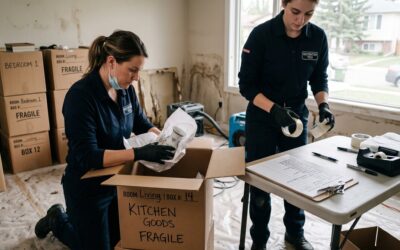
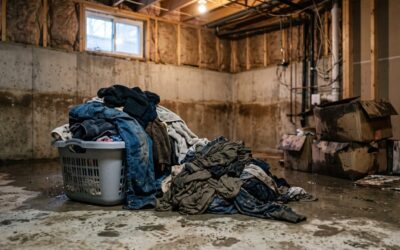
When a flood, burst pipe, or sewer backup soaks your paperwork, the clock starts immediately. Document restoration after water damage is possible far more often than people expect — wet books, files, photos, and records can frequently be saved — but only if you act within the first 24 to 48 hours before ink runs, pages fuse, and mould takes hold. This Calgary guide explains what can be recovered, how professional freeze-drying works, the exact steps to take in the first hours, and when to call a contents restoration specialist instead of risking irreplaceable documents on a DIY attempt.
Table of Contents
Key Takeaways
- Most water-damaged documents can be restored if treated within 24 to 48 hours, before ink bleeds and mould begins to grow.
- Freezing wet documents immediately stops deterioration and buys time to plan proper restoration.
- Professional freeze-drying (sublimation) removes water without the warping, sticking, and staining that air-drying causes.
- Modern vacuum freeze-drying can complete a batch in about 5 to 7 days, versus 14 to 28 days for older equipment.
- Mould can begin growing on damp paper within 24 to 48 hours, so speed is the single biggest factor in successful document restoration.
Can water-damaged documents be restored?
Yes — most water-damaged documents can be restored if they are treated quickly. Paper is resilient when handled correctly, and professional contents restoration teams routinely recover books, files, certificates, and records that look like total losses. The deciding factor is not how wet the paper is, but how fast the drying process begins and whether the right method is used.
The biggest threats are time and mould, not the water itself. Every hour wet paper sits at room temperature, ink dissolves further, pages swell and stick, and mould spores activate. Documents with water-soluble inks, coated or glossy stock, and tightly bound books are the hardest to save, while standard printed and laser-printed pages recover well. If your documents were soaked alongside other belongings, our contents cleaning and restoration services can triage everything together and tell you honestly what is recoverable.
What to do in the first 24-48 hours
The most important action you can take is to freeze wet documents as soon as possible. Freezing halts deterioration and mould growth instantly, giving you time to arrange professional restoration without losing the documents in the meantime. This single step has saved countless irreplaceable records.
If you cannot freeze them right away, follow these priorities:
- Handle wet paper as little as possible — soaked pages tear easily.
- Do not try to separate stuck-together pages; you will rip them.
- Place wax paper between documents if you must stack them, then bag and freeze.
- Keep documents cool and out of direct sunlight and heat.
- Photograph everything for your insurance claim before it is packed.
Speed matters because mould can begin growing within 24 to 48 hours. If the water came from a contaminated source such as a sewer backup, treat the documents as a health hazard and let professionals handle them. For the broader belongings around them, our guide on the top signs your belongings can be restored after water damage helps you decide what to prioritize.
How professional freeze-drying works
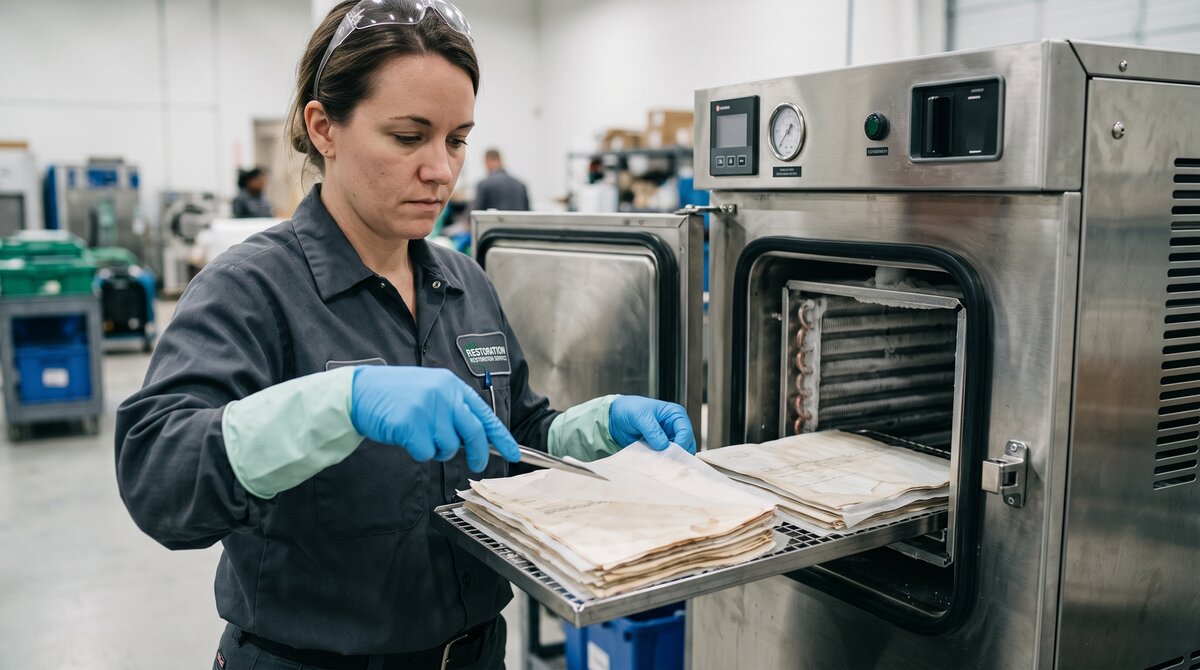
Freeze-drying restores documents by removing water through sublimation — turning ice directly into vapour without it ever becoming liquid again. Because the water never re-wets the paper, freeze-drying avoids the warping, page-sticking, staining, and ink bleed that ordinary air-drying causes. It is the method libraries, archives, and professional restorers rely on for valuable records.
The process begins by freezing the documents solid, which stops all further damage. They are then placed in a vacuum chamber where low temperature and low pressure cause the frozen moisture to sublimate away. According to the Northeast Document Conservation Center’s guidance on freezing and drying wet books and records, freezing is the key step that buys time, while vacuum freeze-drying produces the best results for bound and high-value materials. Modern equipment can complete a batch in roughly 5 to 7 days, compared with 14 to 28 days for older chambers.
Document drying methods compared
Not every method suits every document. The right choice depends on value, volume, and how wet the materials are.
| Method | Best for | Risk |
|---|---|---|
| Air-drying | A few slightly damp pages | Warping, sticking, mould if too slow |
| Freezing | Immediate first response | None — pauses damage until drying |
| Vacuum freeze-drying | Books, valuable or bulk records | Requires specialized equipment |
| Dehumidification drying | Damp, not soaked, paper | Slower; mould risk if delayed |
Air-drying can work for a handful of lightly damp pages, but for soaked books, large volumes, or sentimental and legal documents, freeze-drying is the safest route. The wrong method does not just fail — it can permanently destroy documents that freeze-drying would have saved.
Mould, ink bleed, and other risks
Two problems make document restoration urgent: mould and ink bleed. Mould can begin colonizing damp paper within 24 to 48 hours, and once it spreads through a stack it can damage every page and pose a health risk. Freezing stops mould cold, which is why it is the recommended first step even before you decide on a restoration plan.
Ink bleed is the second risk. Water-soluble inks, inkjet prints, and handwriting in non-permanent ink can dissolve and migrate the longer they stay wet, blurring text beyond recovery. Coated and glossy papers are especially prone to permanent sticking. This is why minimizing handling and freezing quickly matters so much. For belongings already showing mould, our guide on protecting your belongings from mould after water damage explains the wider risk and how professional treatment contains it.
DIY vs. professional document restoration
For a few damp pages of replaceable paper, careful air-drying at home is reasonable. For anything valuable, voluminous, or contaminated, professional restoration is the safer choice. Specialists have freeze-drying equipment, controlled environments, and the experience to recover documents that DIY methods would ruin.
Professionals also document everything for your insurance claim, sanitize materials to prevent mould from returning, and store restored documents in proper conditions until your property is ready. After freeze-drying, archival best practice keeps documents in a cool, low-humidity environment to prevent any return of mould. When the documents are irreplaceable — legal records, business files, family papers — the cost of professional restoration is small next to the cost of losing them. Our full contents pack-out services can remove, restore, and return your documents alongside the rest of your belongings.
Why Calgary Contents is the right choice for document restoration
Calgary Contents is a specialized contents restoration company serving Calgary, Airdrie, Chestermere, Cochrane, and the surrounding area. Unlike general restoration contractors who focus on the building, we focus entirely on your belongings — including the documents, books, and records that are often the hardest to replace. Our motto is simple: we save your memories one item at a time.
We respond fast because we know the first 48 hours decide what survives, and we use professional drying methods, ultrasonic cleaning, and controlled environments to recover materials others write off. Every item is photographed and catalogued for your insurance claim, sanitized to stop mould, and returned to you in proper condition. Locally owned and contents-focused, we treat your water-damaged documents the way you would — as something worth fighting to save.
Conclusion
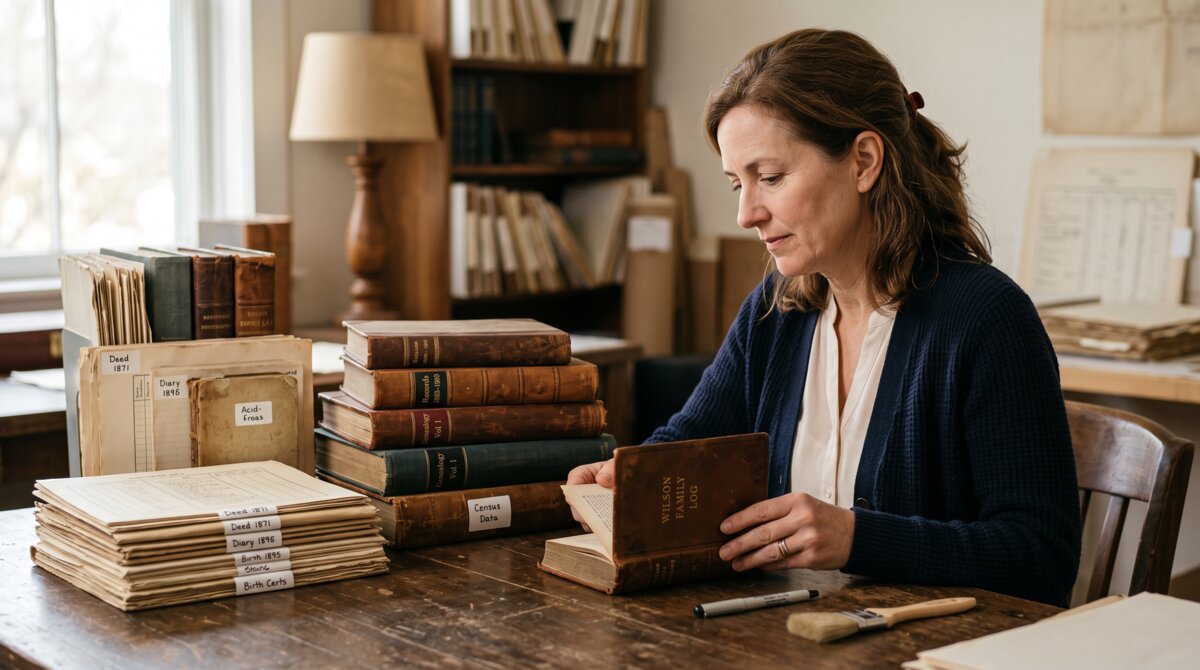
Document restoration after water damage comes down to one thing: speed. Most wet documents can be saved, but only if you freeze them within 24 to 48 hours and use the right drying method — usually professional freeze-drying for anything valuable. Mould and ink bleed are the real enemies, and both are beaten by acting fast. If your documents matter, freeze them, photograph them, and call a contents specialist. With the right response in the first two days, even soaked, seemingly ruined documents can come back.
Frequently Asked Questions
Can water-damaged documents be restored?
Yes, most can be restored if treated within 24 to 48 hours. Freezing them immediately stops deterioration and mould, and professional freeze-drying then removes the water without warping or staining. Standard printed pages recover well; water-soluble inks and glossy stock are harder to save.
How do you dry out wet documents?
For a few damp pages, air-dry them flat in a cool, well-ventilated space. For soaked, valuable, or bulk documents, freeze them first to stop damage, then use professional vacuum freeze-drying, which removes moisture through sublimation and avoids sticking and warping.
Should I freeze water-damaged books and papers?
Yes. Freezing is the recommended first step because it instantly halts mould growth and deterioration, buying time to arrange proper restoration. Place wax paper between items if stacking, bag them, and freeze as soon as possible rather than letting them sit wet.
How long does document freeze-drying take?
Modern vacuum freeze-drying typically takes about 5 to 7 days per batch, while older equipment can take 14 to 28 days. Timelines depend on how wet and how numerous the documents are, but freezing them first means there is no rush to start the drying chamber.
How fast does mould grow on wet paper?
Mould can begin growing on damp paper within 24 to 48 hours at normal room temperature. That short window is why freezing wet documents quickly is so important — it stops mould before it starts and protects every page in the stack.