After a fire, flood, or disaster, homeowners often assume fragile belongings cannot be safely cleaned. Items like crystal glassware, antiques, collectibles, electronics components, jewelry, and intricate household goods appear too delicate to withstand restoration.
However, modern contents restoration has evolved significantly. One of the most advanced and effective technologies used today is ultrasonic cleaning — a precision cleaning method capable of restoring delicate items that traditional cleaning methods cannot safely handle.
For Calgary homeowners dealing with smoke, soot, water damage, or contamination, ultrasonic cleaning plays a crucial role in preserving sentimental and irreplaceable belongings while ensuring proper deodorization and decontamination.
Calgary Contents is a trusted name in Southern Alberta for restoring valued and fragile contents after disasters. Our restoration process combines advanced technology with compassionate care, focusing on retrieval, restoration, and pack-back of belongings that matter most.
This guide explains how ultrasonic cleaning works, why it’s uniquely effective for delicate items, and how it supports long-term odour removal and contents recovery.
Table of Contents
- What Is Ultrasonic Cleaning?
- How Ultrasonic Cleaning Technology Works
- Why Traditional Cleaning Can Damage Delicate Items
- Top Benefits of Ultrasonic Cleaning for Contents Restoration
- What Types of Items Can Be Ultrasonically Cleaned?
- Ultrasonic Cleaning After Fire Damage
- Ultrasonic Cleaning After Water Damage
- How Ultrasonic Cleaning Supports Odour Removal and Deodorization
- The Role of Decontamination in Ultrasonic Restoration
- The Ultrasonic Cleaning Process Step-by-Step
- Items That Should NOT Be Ultrasonically Cleaned
- Why Professional Handling Matters
- Ultrasonic Cleaning vs Manual Cleaning
- Why Calgary Homeowners Benefit from Ultrasonic Cleaning
- How Calgary Contents Uses Ultrasonic Cleaning to Save What Matters
What Is Ultrasonic Cleaning?
Ultrasonic cleaning is a specialized cleaning process that uses high-frequency sound waves transmitted through liquid to remove contaminants from surfaces — including areas too small or intricate for manual cleaning.
Unlike scrubbing or wiping, ultrasonic cleaning works at a microscopic level, gently lifting contaminants away without damaging delicate materials.
The process is widely used in industries requiring precision cleaning, including:
- Medical equipment sterilization
- Electronics manufacturing
- Jewelry restoration
- Aerospace component cleaning
In contents restoration, it has become one of the most effective solutions for delicate household items affected by fire or water damage.
How Ultrasonic Cleaning Technology Works
Ultrasonic cleaning relies on a scientific process called cavitation.
Step-by-step mechanism:
- High-frequency sound waves pass through a cleaning solution.
- These waves create millions of microscopic bubbles.
- The bubbles rapidly form and collapse.
- This controlled energy release lifts dirt, soot, oils, and contaminants away from surfaces.
Because the bubbles are microscopic, they reach:
- Tiny crevices
- Decorative engravings
- Porous textures
- Internal components
This allows deep cleaning without abrasion or mechanical force.
Why Traditional Cleaning Can Damage Delicate Items
After disaster damage, many items are fragile due to exposure to heat, moisture, or contamination.
Traditional cleaning methods can cause:
- Scratches on glass or metals
- Broken decorative elements
- Fabric distortion
- Finish removal from antiques
- Water trapping inside complex objects
Manual scrubbing also struggles to reach tight areas where smoke residue and odour-causing particles accumulate.
Ultrasonic cleaning eliminates the need for aggressive handling.
Top Benefits of Ultrasonic Cleaning for Contents Restoration
1. Non-abrasive cleaning
No brushes or harsh friction are required, reducing damage risk.
2. Deep penetration
Cleans areas unreachable by hand cleaning.
3. Effective odour removal
Removes residue responsible for persistent odour rather than masking smells.
4. Faster processing
Multiple items can be cleaned simultaneously.
5. Consistent results
Uniform cleaning across complex surfaces.
6. Supports decontamination
Helps remove bacteria, soot particles, and contaminants after floods or fires.
What Types of Items Can Be Ultrasonically Cleaned?
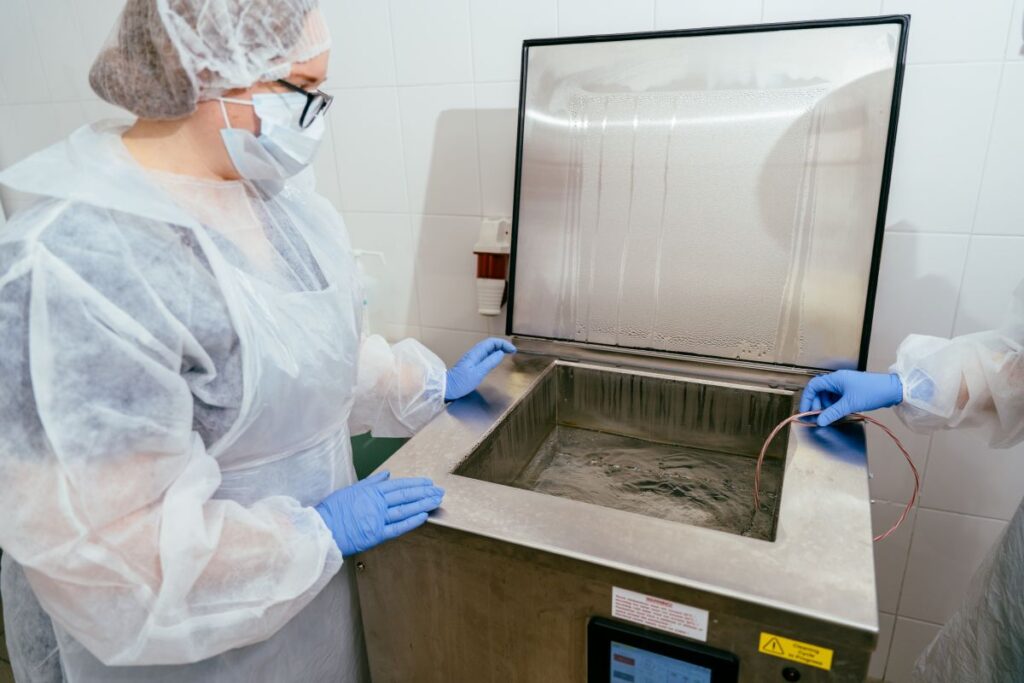
Ultrasonic cleaning is ideal for many delicate household belongings, including:
- Crystal and glassware
- Fine china and ceramics
- Jewelry and watches
- Metal décor and collectibles
- Small appliances and removable components
- Tools and hardware
- Decorative figurines
- Light fixtures and intricate hardware
- Non-porous antiques
Each item is evaluated individually to ensure compatibility.
Ultrasonic Cleaning After Fire Damage
Fire damage leaves behind microscopic soot particles and oily smoke residues that cling tightly to surfaces.
Ultrasonic cleaning helps by:
- Removing soot embedded in small crevices
- Breaking down smoke films on hard surfaces
- Supporting deodorization by eliminating residue sources
- Restoring shine and clarity to glass and metal items
Without deep cleaning, smoke odour often returns even after surface wiping.
Ultrasonic Cleaning After Water Damage
Flood or water exposure introduces contaminants and mineral residues that are difficult to remove manually.
Ultrasonic cleaning assists with:
- Removing sediment and residue deposits
- Cleaning intricate components safely
- Supporting decontamination after grey-water exposure
- Preventing long-term corrosion on metals
Combined with controlled drying, this process can significantly extend the lifespan of affected belongings.
How Ultrasonic Cleaning Supports Odour Removal and Deodorization
Odour after disasters comes from microscopic particles bonded to surfaces.
Because ultrasonic cleaning removes contaminants at a microscopic level, it:
- Eliminates odour sources rather than covering them
- Reduces odour rebound
- Improves effectiveness of final deodorization treatments
This makes ultrasonic cleaning a critical step in successful contents restoration.
The Role of Decontamination in Ultrasonic Restoration
Following floods or fires, items may carry:
- Bacteria
- Soot residues
- Chemical contaminants
- Organic debris
Ultrasonic cleaning solutions are selected to safely assist with decontamination while protecting materials.
Proper rinsing and drying ensure items are safe before returning to your home.
The Ultrasonic Cleaning Process Step-by-Step
- Assessment – Items evaluated for material compatibility.
- Pre-cleaning – Loose debris removed carefully.
- Immersion – Items placed in ultrasonic tank with specialized solution.
- Ultrasonic cycle – Cavitation removes contaminants.
- Rinse stage – Residual cleaning agents removed.
- Controlled drying – Prevents moisture damage.
- Inspection and deodorization – Final quality check before storage or pack-back.
Items That Should NOT Be Ultrasonically Cleaned
While highly versatile, ultrasonic cleaning is not suitable for:
- Certain soft gemstones
- Extremely fragile layered antiques
- Some porous materials
- Electronics that cannot be safely disassembled
- Items with unstable finishes
Professional evaluation determines the safest method.
Why Professional Handling Matters

Improper ultrasonic cleaning can cause:
- Material damage from incorrect frequencies
- Chemical reactions from wrong solutions
- Overexposure leading to deterioration
Professional contents restoration specialists adjust:
- Frequency levels
- Cleaning chemistry
- Exposure time
- Drying conditions
This ensures safe and effective restoration.
Ultrasonic Cleaning vs Manual Cleaning
| Feature | Ultrasonic Cleaning | Manual Cleaning |
|---|---|---|
| Contact with item | Minimal | High |
| Risk of scratches | Very low | Higher |
| Cleans intricate areas | Excellent | Limited |
| Odour removal effectiveness | High | Moderate |
| Consistency | Uniform | Variable |
| Efficiency | High | Labour intensive |
Why Calgary Homeowners Benefit from Ultrasonic Cleaning
Calgary’s environment presents unique restoration challenges:
- Dry air that intensifies smoke residue bonding
- Seasonal humidity changes affecting odour rebound
- Mineral-heavy water deposits after flooding
Ultrasonic cleaning helps address these issues by removing contamination at the microscopic level before items return to the home.
How Calgary Contents Uses Ultrasonic Cleaning to Save What Matters
At Calgary Contents, ultrasonic cleaning is integrated into a comprehensive contents restoration workflow:
- Detailed inventory and documentation
- Careful pack-out and transport
- Ultrasonic cleaning for compatible delicate items
- Professional deodorization and decontamination
- Secure storage during property restoration
- Organized pack-back once the home is ready
Our goal is to preserve as many belongings as safely possible while ensuring restored items are clean, odour-free, and ready for everyday use again.